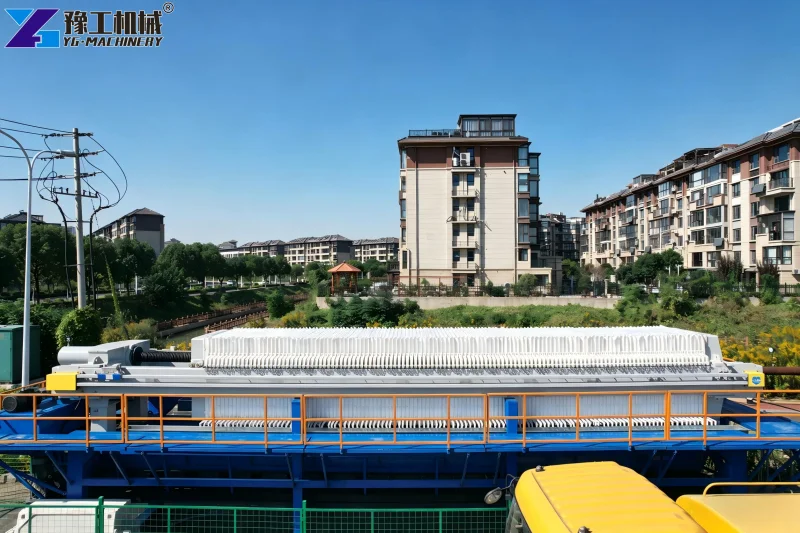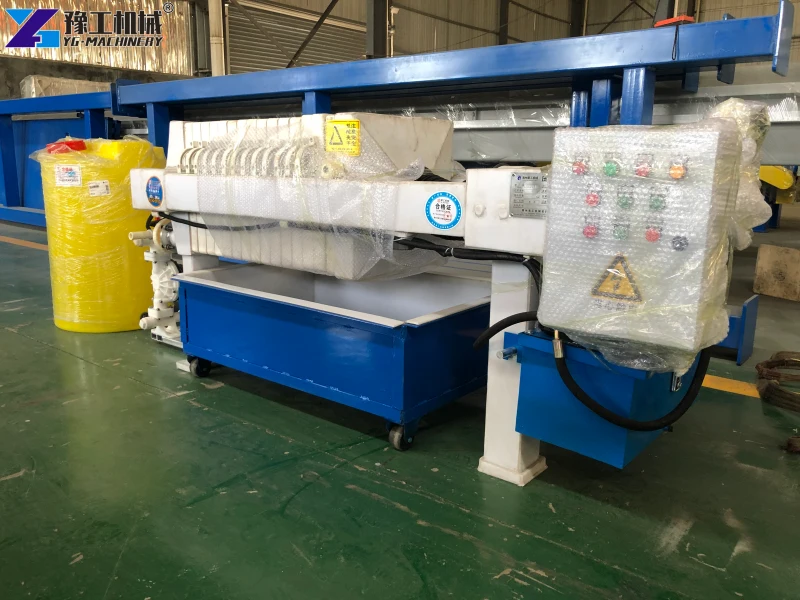
When urban infrastructure projects involve deep foundation piling or metro shield tunneling, the biggest bottleneck rarely comes from drilling speed. Instead, contractors struggle with mountains of waste slurry generated daily. This slurry typically holds just 10% to 15% solid content, packed with sticky bentonite and ultra-fine clay. Most competitors targeting piling mud filter press simply list generic machine specs while ignoring a harsh jobsite reality: low-solid, high-viscosity mud blinds standard filter cloths within minutes.
This case study walks through an actual overseas urban transit project, demonstrating how a two-stage process—primary sand screening followed by a 500m² high-pressure press—delivers 30–50m³/h throughput and stackable dry cakes.
Industry Practical Tip: Never pump raw bentonite piling slurry directly into a filter press without primary screening; fine clays will blind the cloth pores within 15 minutes.
Jobsite Pain Points & Applications: Why Is Piling and Tunneling Mud So Hard to Dewater?
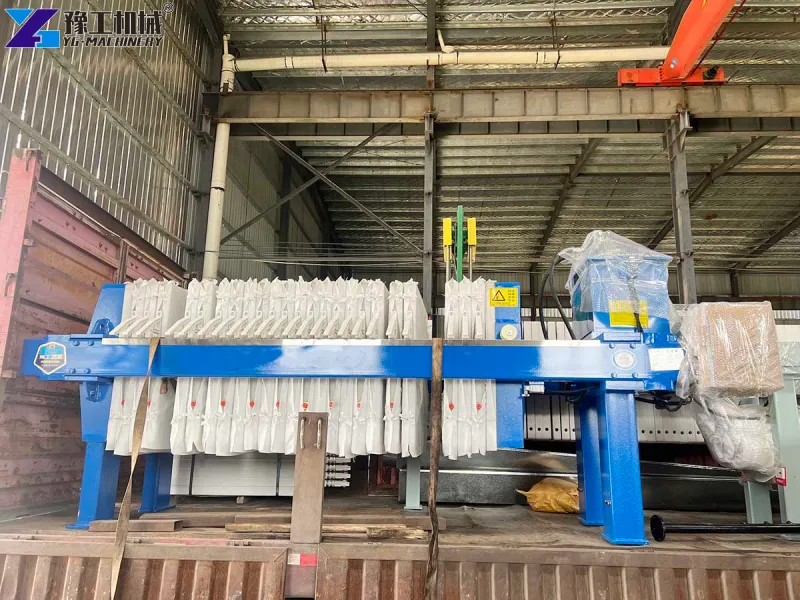
Unlike coarse mining tailings, slurry from bridge piling and underground tunneling features low solid density, strong colloidal stability, and extremely slow natural settling.
- Urban Bridges & High-Rise Piling: Bored piles discharge massive volumes of mud in tight city footprints where slurry overflow into municipal drains triggers heavy fines.
- Metro Shield Tunneling: When boring through soft clay layers, a shield tunneling mud filter press must match the TBM advance rate, or full slurry tanks will halt tunnel excavation.
- Deep Excavations & Waterway Dredging: Marine bridge piers or settling basins often deploy an underwater dredging robot to extract bottom silt, demanding high continuous throughput from downstream dewatering units.
Industry Practical Tip: Before sizing your dewatering plant, calculate peak daily mud discharge and build at least a 20% capacity buffer into your hourly feed rate.
Real Overseas Case Study: Solving Slurry Disposal at a Metro & Viaduct Project in Kuala Lumpur, Malaysia
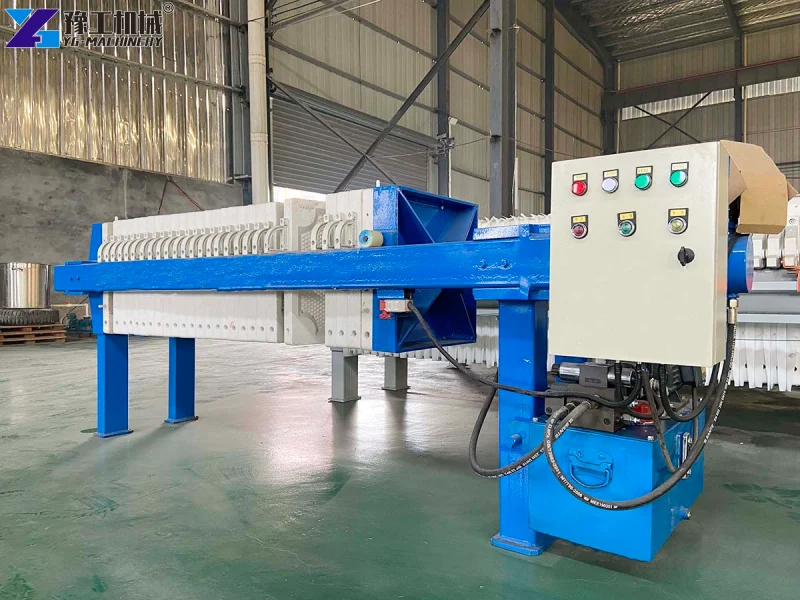
To prove how two-stage separation performs under pressure, let us examine a recent infrastructure deployment.
Project Background: Consider our YG Machinery system delivered in 2025 to an urban viaduct and metro interchange project in Kuala Lumpur, Malaysia. Drilling large-diameter bored piles through sticky clay strata generated roughly 400m³ of waste mud daily, with initial solid content hovering around 12%.
Engineering Hurdles: Local municipal regulations strictly banned liquid mud tankers on city roads, mandating dry cake hauling via standard dump trucks. Furthermore, the jobsite sat next to a commercial district with minimal space for settling lagoons.
Two-Stage Solution & Measured Data: Our engineers configured a compact system pairing primary desanding with a 500m² automated high-pressure press. Field operations recorded the following metrics:
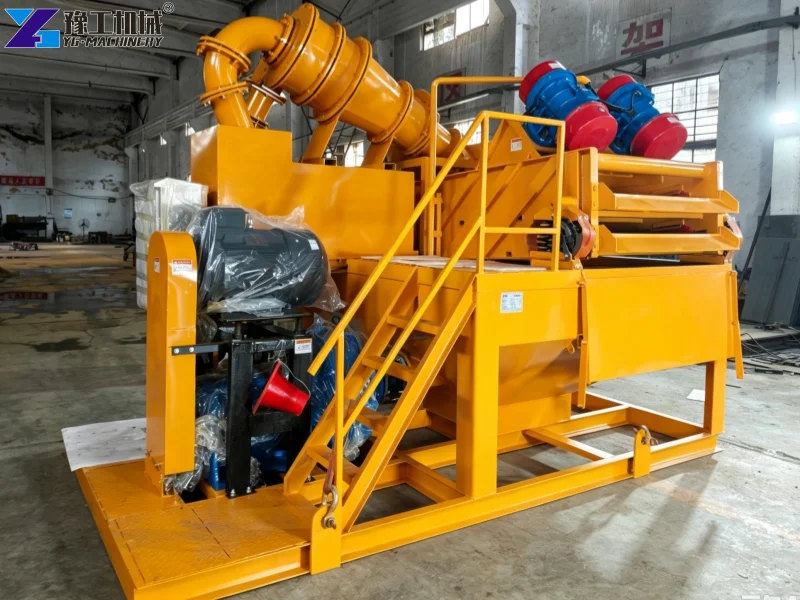
- Stage 1: Primary Screening & Thickening: Raw mud first entered a mud separation machine (high-frequency shale shakers and hydrocyclones) to strip out coarse sand above 74 microns. This step thickened the fine slurry to 18%–20% solids before entering the buffer tank, slashing downstream press loads.
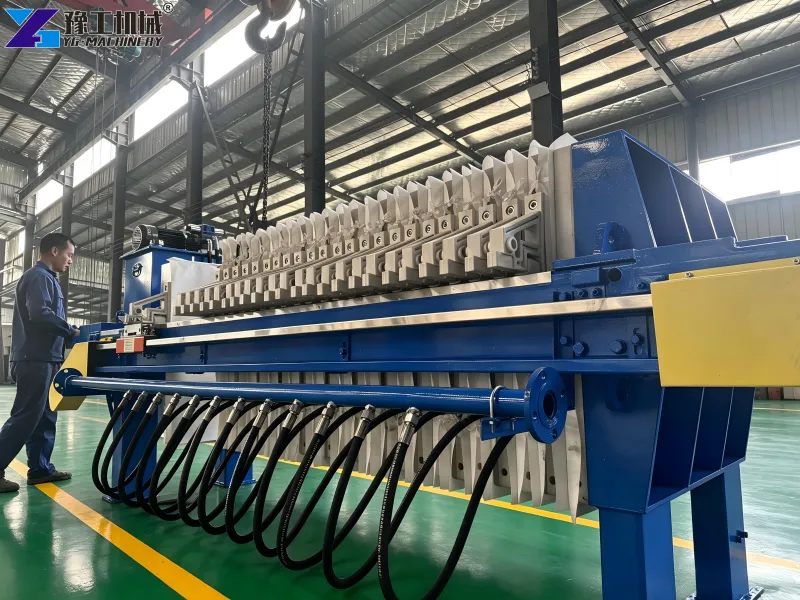
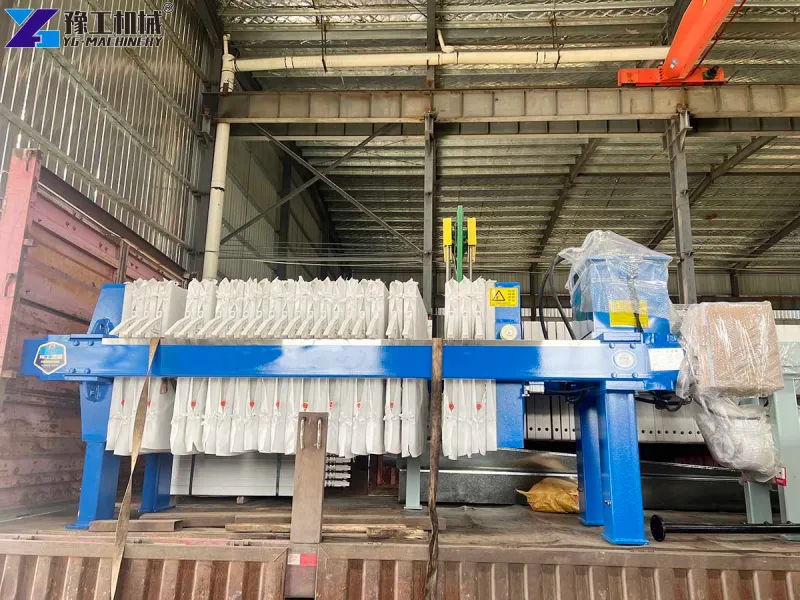
- Stage 2: High-Speed 500m² Pressing: After flocculant conditioning in a dosing tank, pumps fed the thickened slurry into our 500m² piling mud filter press. Under continuous operation, the feed rate held steady at 30–50m³/h.
- Dewatering & Recycling Results: Following a 1.2 MPa secondary membrane squeeze, filter cake moisture dropped below 24%—dry enough for direct dump truck hauling without dripping. Meanwhile, 100% of the clarified filtrate returned to mix fresh drilling mud, cutting monthly disposal and fresh water costs by over 45%.
Industry Practical Tip: On hot, rainy Southeast Asian jobsites, prioritize a sludge dewatering filter press with automatic plate shifting and high-pressure cloth washing to eliminate manual cake scraping delays.
Piling & Tunneling Filter Press Selection and Operations Q&A
This throughput relies on combining primary pre-thickening, variable-frequency high-flow feed pumps, and fast membrane squeezing. Upstream desanding cuts abrasive wear, while high-pressure membranes shorten the final filtration cycle, boosting average hourly capacity.
Beyond precise polymer dosing to break down colloidal bonds, our integrated high-pressure wash bar automatically rinses both sides of the filter cloths every 3 to 5 cycles, keeping cloth permeability above 90%.
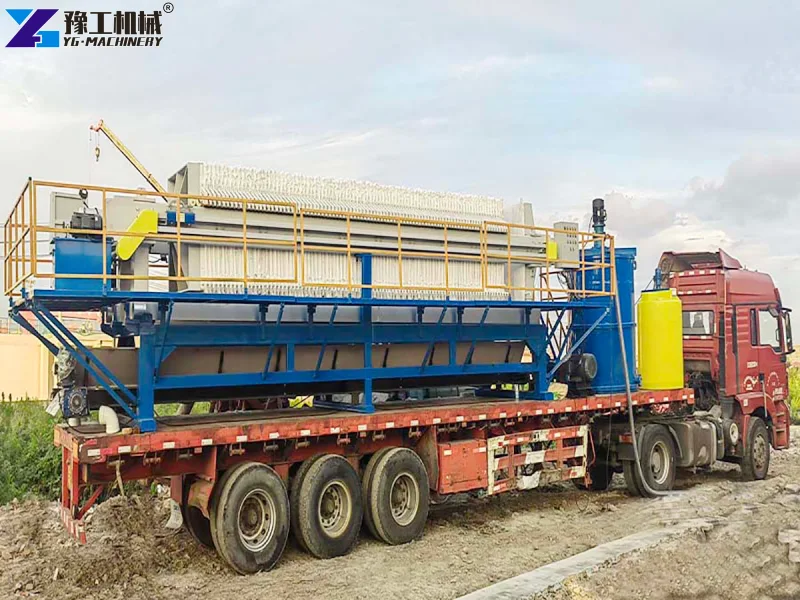
For multi-site contractors, we build the main press, feed pumps, and dosing units on modular skid frames matching standard container footprints. Crews can disconnect hoses, crane-load the modules, and reassemble the plant at a new jobsite within a single day.