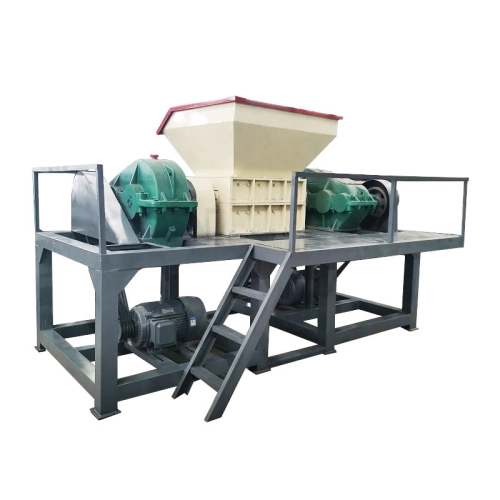
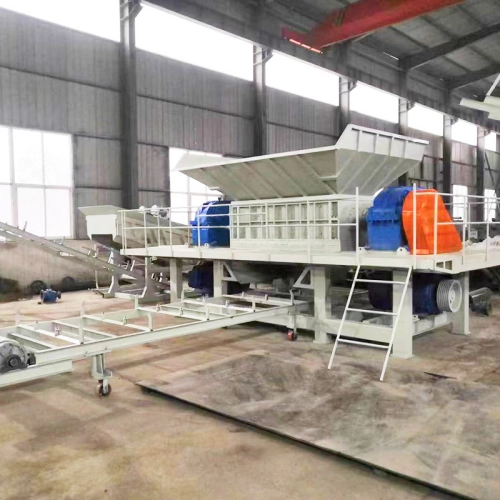
In the industrial waste recycling and renewable energy sectors, heavy-duty tire shredders serve as core equipment for processing scrap rubber. According to industry data, scrap tires contain 60%–70% rubber and 10%–15% high-tensile steel wire by weight. By utilizing high-torque shearing, recyclers reduce stockpile volume while turning waste into Tire-Derived Fuel (TDF), rubber granules, or fine powder with solid market value.
For overseas contractors and plant managers, choosing the right tire shredder machine requires looking beyond motor power. You need to evaluate feed size, target capacity, and final application. Based on over a decade of international project implementations, YG Machinery breaks down the selection logic and setup strategy below.
Tire Shredders Parameters:
| Model | YG-600 | YG-1000 | YG-1200 | YG-1500 | YG-1800 |
| Knife size(mm) | Φ200*20 | Φ300*30 | Φ300*40 | Φ500*50 | Φ600*60 |
| Power (kW) | 11*2 | 37*2 | 45*2 | 75*2 | 90*2 |
| Capacity(t/h) | 0.3-0.5 | 1-1.2 | 2.5-3 | 3.8-4.5 | 6-7 |
| Knife quantity(pcs) | 30 | 26 | 30 | 38 | 45 |
| Machine size(m) | 2.6*1*2.1 | 3.4*1.25*2.2 | 3.8*1.25*2.2 | 4.4*1.5*2.5 | 5.3*2.1*2.8 |
Which Industrial Sector Needs Tire Shredders Today?
Dual-shaft tire shredders run at low speeds with high torque. They handle heavy impact and process tough material across several key recycling operations:
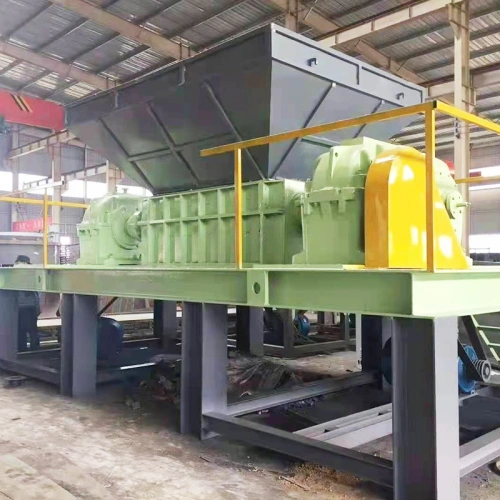
- Tire Recycling & Reclaimed Rubber Plants: Shear car tires, truck tires, and small OTR tires into uniform rubber chips. This prepares clean raw stock for steel separation and fine milling.
- Cement Kilns & Power Plants (TDF): Used tires offer high calorific value. A tire shredding machine cuts tires into 50–80mm chips that serve as ideal alternative fuel.
- Multi-Material Recycling Facilities: The same double-shaft structure works as a wood shredding machine (for pallets and scrap furniture) or a plastic shred machine (for drums, pipes, and bulk plastic).
- Municipal Waste Facilities: Shear bulky items, power cables, and drums to slash transport costs and landfill volume.
Hands-on Tip: If your plant processes both wood pallets and scrap rubber, you do not need two separate machines. Swap the cutter blade thickness and tooth profile on your YG shredder to handle tires, pallets, or hard plastics on a single unit.
What Are the 4 Key Parameters When Choosing Tire Shredders?
Focusing on a single specification leads to capacity bottlenecks later. We always advise buyers to clarify four core factors before ordering:
- Feed Size & Tire Type: Car tires (under 800mm diameter) require different chamber dimensions than heavy truck tires (over 1200mm).
- Target Hourly Output: Small batch operations (1 ton/hour) need different housing strength than continuous automated lines (5–8 tons/hour).
- Required Output Size: Decide if you need 50–100mm TDF chips, 3–28mm sports turf granules, or 30–80 mesh rubber powder.
- Steel Wire Content: Check if tires contain heavy bead wire and if you need an upfront debeader or magnetic separators downstream.
Popular Models & Specifications Comparison
YG Machinery offers several standard models tailored to different budget levels:
| Model | Suitable Feed Size | Capacity (t/h) | Main Power (kW) | Recommended Blade Material | Typical Application |
| YG-1000 | ≤14 inch car tires | 1.0 – 2.0 | 37 kW × 2 | 9CrSi Alloy Tool Steel | Car tire rough shredding / Entry level |
| YG-1200 | ≤16 inch car/light truck | 2.5 – 3.5 | 45 kW × 2 | Cr12MoV / SKD-11 | Workhorse for passenger tire plants |
| YG-1400/1600 | Heavy truck tires / pallets | 3.5 – 5.0 | 75 kW × 2 | Heavy Alloy / SKD-11 | Heavy rubber / Hard plastic / Pallets |
Hands-on Tip: 9CrSi steel offers high hardness at a lower cost, making it great for soft rubber and clean materials. For truck tires with thick steel belts or dense timber, choose Cr12MoV or SKD-11 cold-work die steel for better shock resistance and re-weldability.
Standalone Tire Shredder vs. Full Recycling Line: Which Wins?
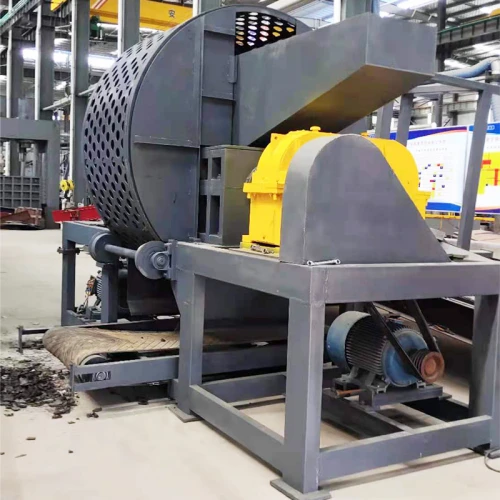
First-time buyers often ask whether to purchase a standalone shredder or a full production line. Your choice depends on how you monetize the output:
Option A: Standalone Shredding (Tire Shredder + Output Conveyor)
Scrap Tires ➔ [ Tire Shredder ] ➔ 50-80mm Rubber Chips (Sold directly as TDF fuel)

Option B: Full Tire Recycling Line (Fully Automated Processing)
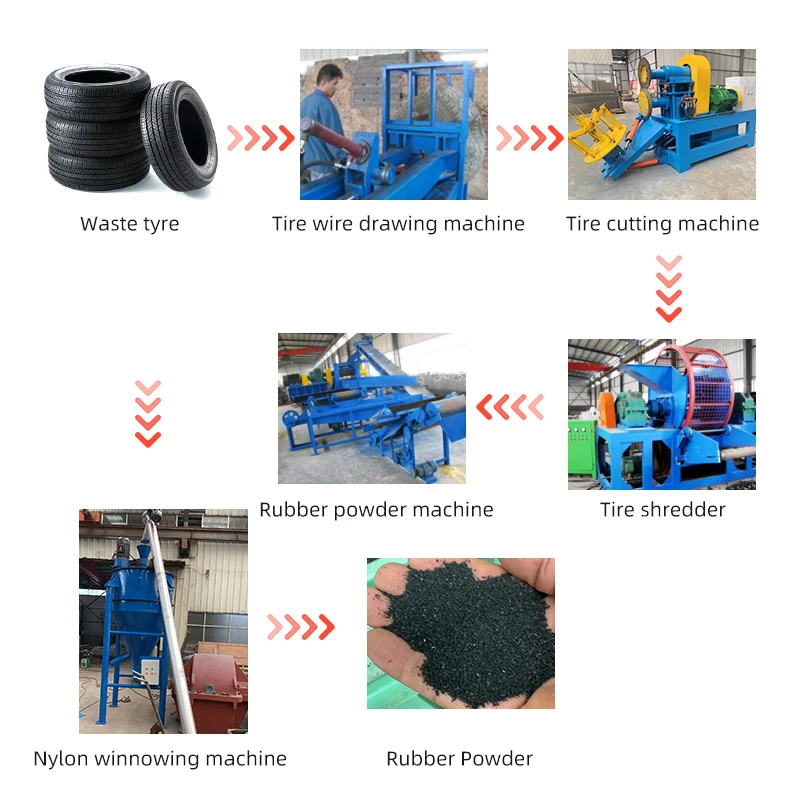
Scrap Tires ➔ Debeading ➔ [ Tire Shredder ] ➔ Fine Granulator ➔ Magnetic Steel Separator ➔ Air Classifier ➔ Rubber Powder Packing
- Standalone Shredder: Lower initial investment and fast setup. A heavy dual-shaft tire shredder with PLC auto-reverse cuts full tires into uniform chips for cement kilns or secondary processing plants.
- Full Line: Includes debeaders, cutters, magnetic separators, and granulators. It separates rubber, steel wire, and fiber cleanly. This produces high-margin granules for athletic tracks or fine rubber powder.
Hands-on Tip: If you are starting with a tight budget or strong local TDF demand, begin with a YG-1200 tire shredder machine. We adjust the electrical panel voltage to match your local grid (380V–480V) at no extra charge and include a 6-meter conveyor belt to get you running faster.
Real Client Story: How a US Plant Boosted Operational Revenue by 35%
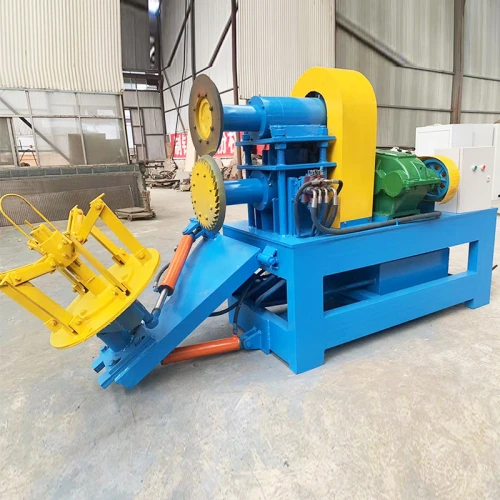
- Client Profile: Mark, operations manager at a mid-sized waste management facility in Texas, USA.
- The Challenge: Their old single-shaft shredder suffered constant jams when processing passenger and light truck tires. Cutter blades needed major service every two weeks, causing high maintenance costs and severe downtime.
- The Solution: YG engineers designed a custom YG-1200 tire shredding machine system. It featured SKD-11 alloy blades, planetary gearboxes, and an integrated PLC auto-reverse control cabinet.
- The Results: Processing capacity jumped from 1.2 tons/hour to 3 tons/hour, while jam-related downtime dropped by 90%. Producing cleaner rubber chips with early steel separation increased the selling price per ton, boosting the plant’s monthly operational revenue by 35%.
Hands-on Tip: Over 90% of jam issues happen when feeding material too fast. Keep the PLC “auto-reverse” feature active at all times. When the motor detects high amperage, it reverses the shafts for 3 seconds to reposition the material, extending gear and motor life by over 3 years.
Overseas Buyer FAQ
YG’s 1200 and larger tire shredders use low-speed, high-torque dual shafts that shred whole passenger tires and many truck tires directly. However, for heavy truck tires with thick steel bead rings, using an upfront wire puller (debeader) reduces blade wear on your tire shredders, extending cutter lifespan by over 40%.
No. YG cutter shafts use a modular design. Individual worn blades can be removed and replaced independently. Additionally, high-toughness SKD-11 blades support surface re-welding and regrinding. You can resurface a blade set 2–3 times before replacement, saving significant maintenance cost over time.
Investing in a durable tire shredder machine forms the backbone of a profitable recycling business. Whether you need a standalone unit for car tires or a multi-material facility processing with a plastic shred machine or wood shredding machine, YG Machinery delivers reliable engineering built for long service life.
Contact our engineering team today to receive a custom equipment proposal and live testing footage!