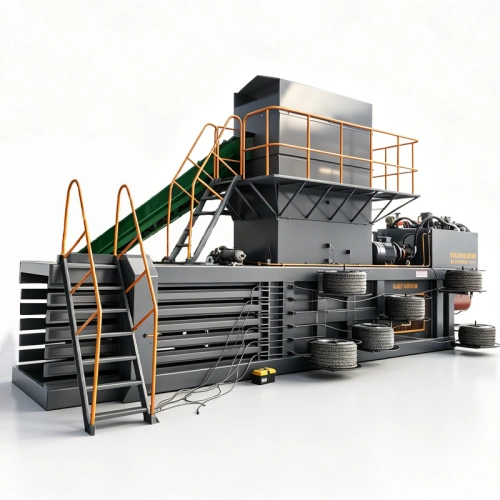
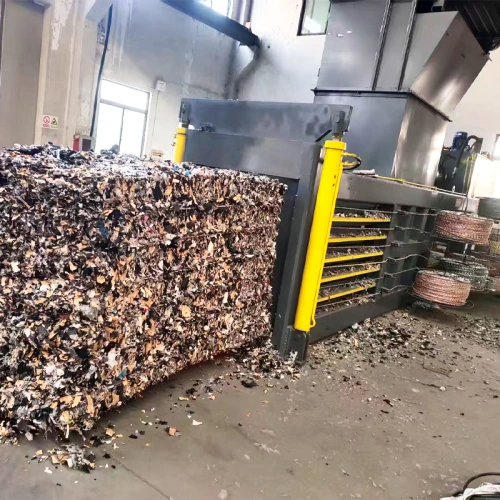
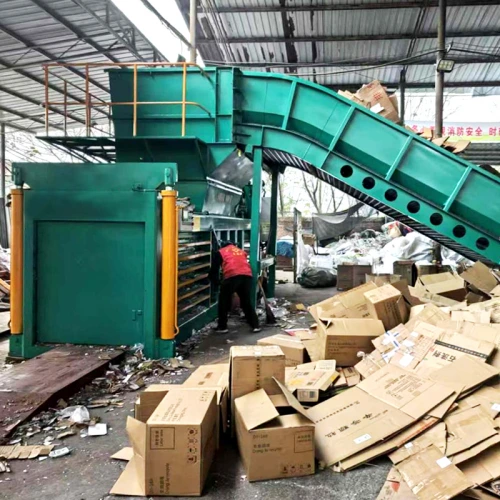
If you run a small factory, warehouse, or recycling yard, you deal with piles of cardboard boxes, plastic films, or agricultural straw every day. These loose materials take up huge space and cost a lot of money to transport. Simply put, a horizontal baler is a large waste compression machine that sits flat on the ground. Its job is straightforward: you load loose paper or plastic into the hopper, and a strong hydraulic ram pushes the material into a tight, dense block (called a bale). After that, wire or strapping binds the bale so it keeps its shape.
Compared to vertical models, a horizontal baler handles higher volumes, feeds material continuously, and creates denser bales. For teams handling several tons of waste daily, it is the primary tool to slash storage and freight costs.
Beginner Avoid-Mistake Tip: Don’t buy a small vertical machine just because your daily waste seems low. If your materials spring back easily—like plastic bottles—a horizontal unit gives you the force needed to lock them down.
Horizontal Baler Parameter
| Model | YG-160 | YG-180 | YG-200 | YG-250 | YG-300 |
| Suitable for packaging materials | Cartons/Solid waste/Plastics | Cartons/Solid waste/Plastics | Cartons/Solid waste/Plastics | Cartons/Solid waste/Plastics | Industrial solid waste shredded material |
| Processing volume | 5-8T/h | 5-8T/h | 5-8T/h | 8-12T/h | 20-30T/h |
| Packaging size | 1150×1250×1600 | 1150×1250×1600 | 1150×1250×1800 | 1150×1250×1800 | Adjustable |
| Weight (kg)/packet | 1000~1300kg (waste paper) | 1000~1300kg (waste paper) | 1000~1300kg (waste paper) | 1000~1300kg (waste paper) | 1000~1300kg (waste paper) |
| Packing machine feed port | 2000mm long × 1150mm wide | 2000mm long × 1150mm wide | 2200mm long × 1150mm wide | 2200mm long × 1150mm wide | 2200mm long × 1150mm wide |
| Main motor | 37kw | 37kw | 45kw | 45kw×2 | 37kw×2 |
| Thrust | 1600KN | 1800KN | 2000KN | 2500KN | 2000KN |
| Main cylinder | Φ250 | Φ270 | Φ300 | Φ340 | φ280 |
| Maximum pressure | 25MPa | 25MPa | 25MPa | 25MPa | 31.5MPa |
| Number of binding threads/pack | 7 | 7 | 7 | 7 | 6 |
Why Choose a Horizontal Hydraulic Baler? Three Main Benefits
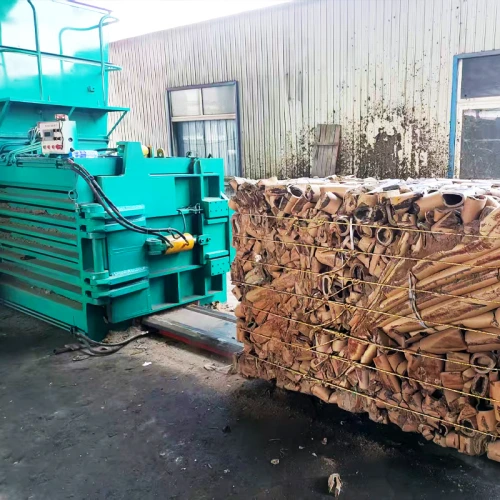
After talking with many first-time machinery buyers, three clear benefits stand out:
- Save Massive Shipping Freight: Loose waste paper takes up huge truck space. By using a hydraulic baling press machine, you compress loose waste so tightly that what used to take five truck trips now fits into just one.
- Save Labor and Time: Modern horizontal units often feature auto-tie systems and simple PLC touch controls. Your operator does not need to manually tie every bale, which cuts labor costs and physical strain.
- Lower Your Electricity Bills: Many beginners worry about power usage. Efficient servo-driven models adjust oil flow on demand. They draw minimal power while idling, cutting energy use by 30% to 50%.
Furthermore, if you handle large volumes of scrap, a waste paper baling machine keeps your working floor clear, organized, and safe for your team.
Beginner Avoid-Mistake Tip: Always check your site’s power supply before ordering. If your facility has power limits, choose a model with a servo system or a fast booster cylinder to prevent circuit breaker trips during startup.
Success Story: A Small Recycling Yard in Southeast Asia
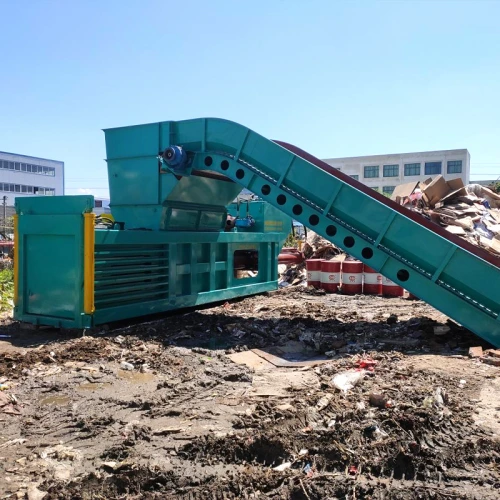
Last year, a customer named Ah Ming took over his family’s recycling business in Malaysia. He faced two big headaches: his yard was constantly cluttered, and manual tying was far too slow. Trucking companies charged him high fees because his loads were mostly empty air.
We looked at his daily volume and suggested moving away from small manual equipment. Instead, he installed a horizontal baler with a lifting door structure.
- The Result: Tasks that previously took four workers an entire day now take one operator just two hours.
- The Return: His bale density tripled, doubling the weight he could load onto each outgoing truck. Within six months, the savings on freight and labor fully covered his machine investment.
Tip: Before ordering, measure your door clearances and leave enough room for forklifts to maneuver around the exit gate.
Beginner Q&A: Selection, Use, and Easy Maintenance
Yes, but select the right door option. Cardboard stays flat easily, while plastic bottles spring back aggressively. For plastics, pick a horizontal baler with a lifting door or anti-rebound hooks to keep materials compressed smoothly.
Not at all. Just follow three basic habits: check your hydraulic oil level regularly, inspect the auto-tie track for debris before starting the day, and grease moving joints on schedule.
Yes. Machines are factory-tested before shipping. Manufacturers provide remote video assistance and step-by-step wiring diagrams. Connecting power and filling hydraulic oil is usually all it takes to get running.
Picking the right horizontal baler does not have to be complicated. Focus on three basics: your daily waste volume, the type of material, and your local power setup. With the right setup, you can quickly turn messy scrap piles into neat bales that drive steady profit.