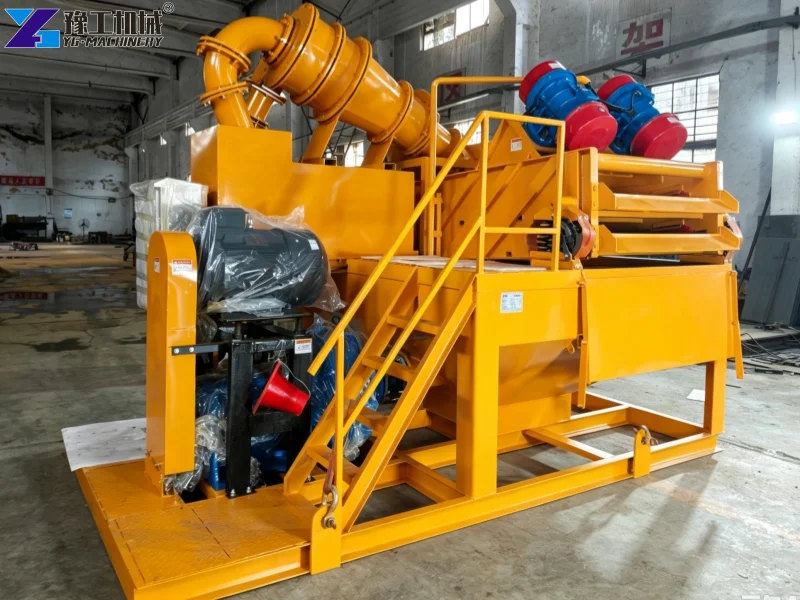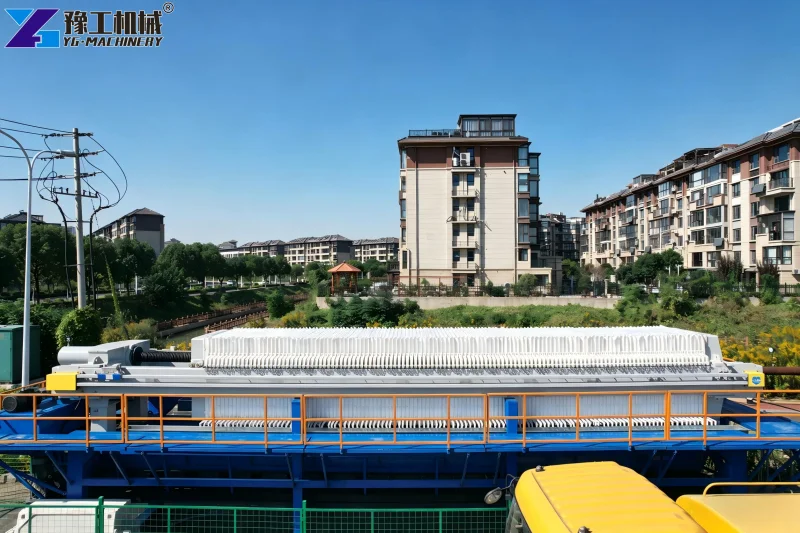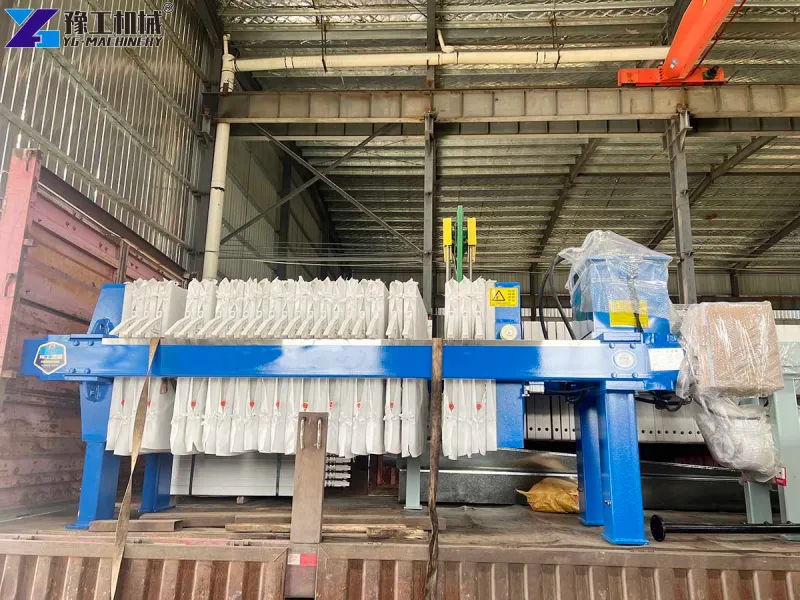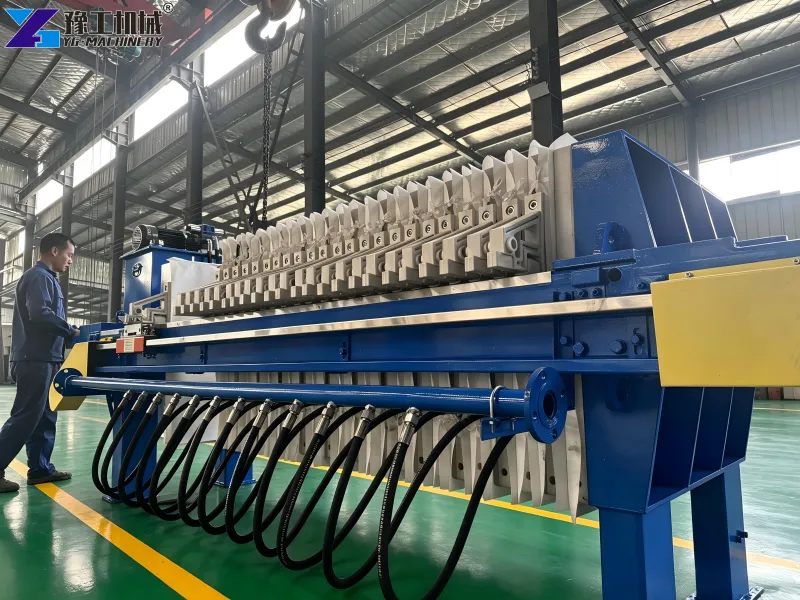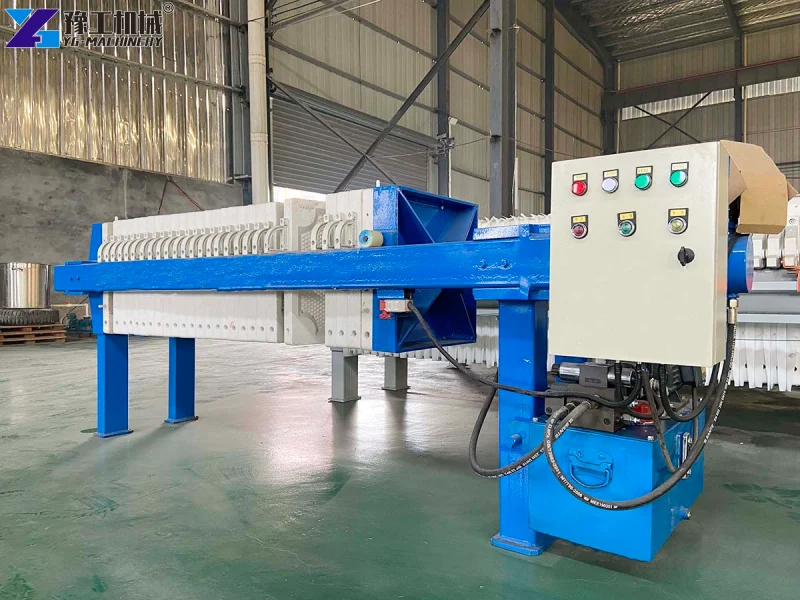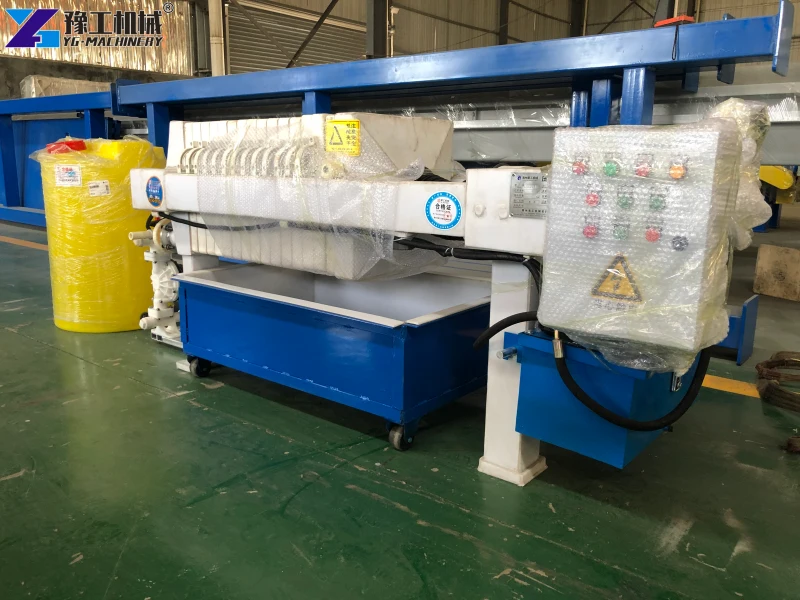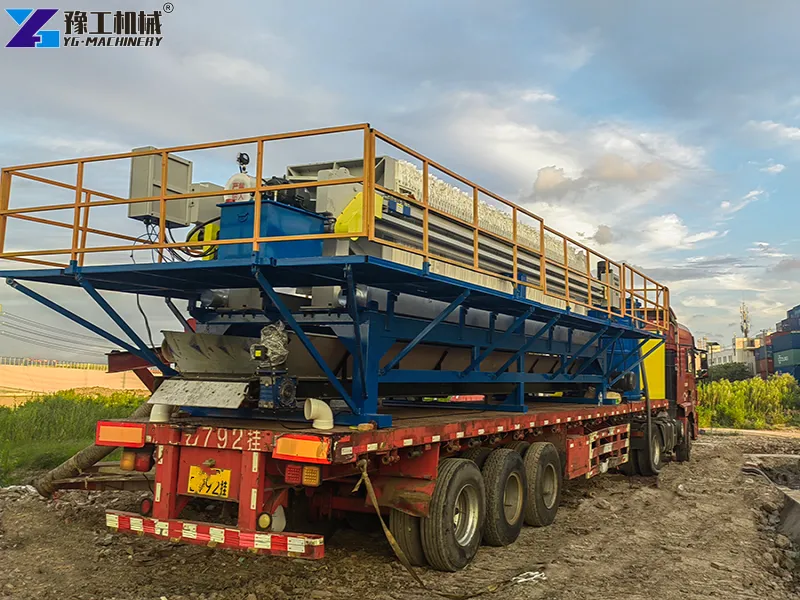
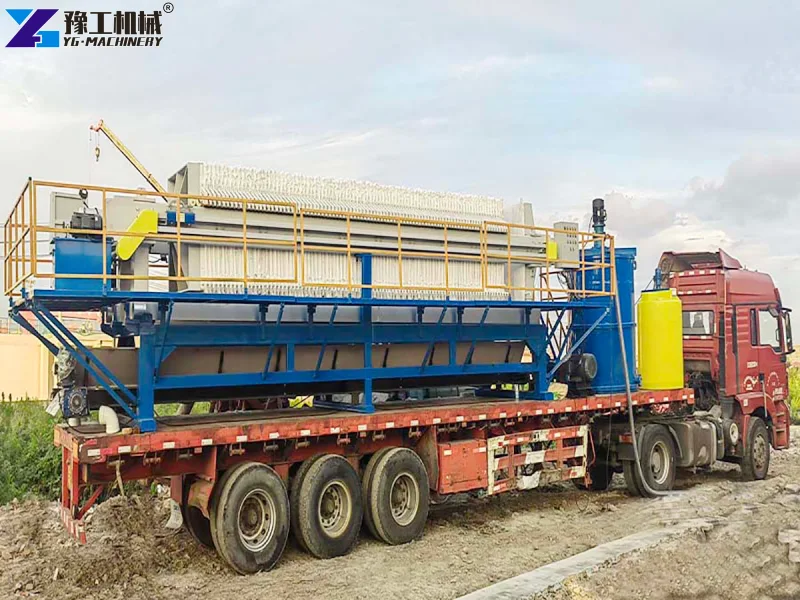
When construction projects involve piling, shield tunneling, or urban river dredging, regulatory compliance for mud discharge and tight site constraints present major hurdles for contractors. While traditional stationary dewatering plants require days of civil engineering and assembly, a containerized or trailer-mounted mobile filter press can be fully operational within hours of arriving on site. This enables instant solid-liquid separation and clean water recycling right at the source.
This article walks you through the step-by-step daily operational workflow (SOP) of a mobile filter press from an overseas jobsite perspective, helping project managers and equipment operators optimize field productivity.
Phase 1: Pre-Operation Setup
Core Goal: Fast positioning, leveling, and hose quick-coupling
Before the piling rig or slurry pump starts up, the mobile filter press must be deployed and connected to site utilities.
- Action: Park the trailer-mounted or containerized portable filter press on the designated pad, then deploy hydraulic outriggers to level the chassis. Connect the power cable (or start the built-in generator), attach the slurry feed line, filtrate discharge hose, and high-pressure wash water line.
- What to Watch: Verify the chassis spirit level shows an inclination of less than $1^\circ$. Ensure all quick-coupling safety pins on high-pressure hoses are securely locked.
- Common Mistake: Engaging the hydraulic clamping cylinder before leveling the frame, which induces uneven stress on the main side beams and deforms the filter plates.
- Practical Tip: Utilize the equipment’s cam-lock quick couplings instead of traditional threaded flanges to cut plumbing setup time by up to 45 minutes.
How Much Does a Mobile Filter Press Cost?
Phase 2: Start-Up & Chamber Sealing
Core Goal: Cylinder clamping, pressure holding, and seal check
Before introducing piling mud or dredged sediment, the filtration chambers must be hermetically sealed.
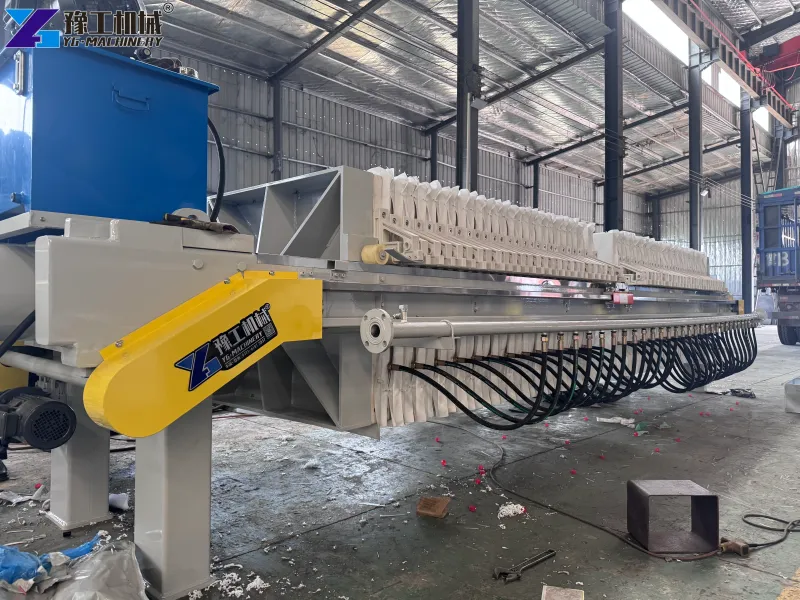
- Action: Switch the PLC control cabinet to “Auto” mode and start the hydraulic power pack. The heavy-duty hydraulic cylinder advances the movable tailplate, clamping the polypropylene plate pack at a preset system pressure of 20 MPa.
- What to Watch: Monitor the hydraulic pressure gauge to ensure it holds steady between 18 and 20 MPa. Inspect plate margins to confirm no foreign debris is caught between sealing faces.
- Common Mistake: Clamping plates with dried mud build-up on sealing edges, which causes slurry leaks and side-spraying during high-pressure feeding.
- Practical Tip: Once automatic pressure holding is active, apply a thin coat of grease along the side guide rails to ensure smooth plate shifting during cake release.
Phase 3: Slurry Feeding & High-Pressure Dewatering
Core Goal: Continuous feeding, solid-liquid separation, and membrane squeeze
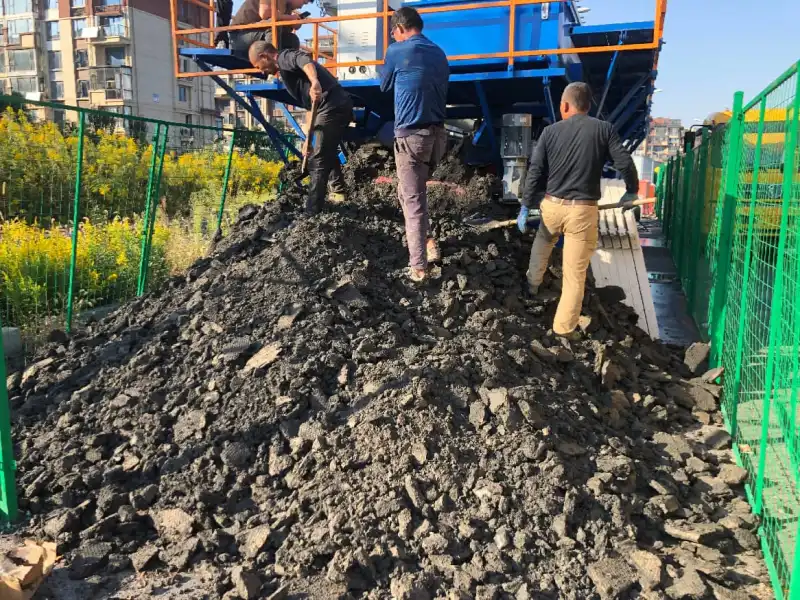
This represents the primary operational phase of the day. Whether processing borehole mud (piling mud filter press application) or working alongside a dredging robot mud dewatering unit, the system performs cyclic dewatering runs.
- Action: Start the variable-frequency feed pump to pump slurry into the chambers. As chambers fill and filtrate discharge tapers off, engage secondary high-pressure membrane squeezing and air blowing to forcibly drive out capillary water from within the cake.
- What to Watch: Keep a close eye on the feed pressure gauge (maintained at 0.6–0.8 MPa) and filtrate clarity. The discharged water from the outlet manifold should run clean and transparent.
- Common Mistake: Overpressurizing the feed pump when chambers are full, which causes filter cloth blinding or premature cloth tearing near the feed center port.
- Practical Tip: For highly colloidal mud, adjust the dosing pump rate from the containerized auto-polymer preparation unit to speed up flocculation and water drainage.
How Much Does a Mobile Filter Press Cost?
Phase 4: Cake Discharge & Site Rotation
Core Goal: Automatic plate shifting, cake drop, and quick haul-off
Once the filtration cycle concludes and cake dryness targets are reached, the unit transitions to the discharge cycle.
- Action: Release hydraulic clamping pressure and engage the automatic plate shifter. Plates are drawn open one by one, allowing dry mud cakes to drop under gravity onto the underlying belt conveyor for direct truck loading.
- What to Watch: Verify that each mud cake detaches cleanly from the filter cloths as plates open, checking for localized cloth sticking.
- Common Mistake: Re-clamping the plate pack while a partial mud cake remains stuck between plates, which causes severe plate cracking under hydraulic force.
- Practical Tip: If handling sticky clay, activate the pneumatic cloth-shaking or flexing device to achieve 100% hands-free cake discharge without manual scraping.
Phase 5: End-of-Day Maintenance & Shutdown
Core Goal: High-pressure cloth washing, system reset, and safe shut-down
Proper end-of-day maintenance keeps the mobile filter press operating at peak efficiency day after day.
- Action: Activate the onboard high-pressure water spray gun or the auto cloth washing system to wash residual cake particles off cloth surfaces and side rails. Depressurize the hydraulic system, disconnect quick-coupler hoses, and isolate the main power switch.
- What to Watch: Inspect filter cloths for pinhole tears or pore blinding. Confirm that all slurry feed valves and drain valves are fully closed.
- Common Mistake: Shutting down without washing the filter cloths, allowing mud to dry in the fabric mesh and drastically reducing dewatering flow rates the next morning.
- Practical Tip: Perform a weekly check on hydraulic oil level and quality. During cold weather operations, open air drain valves to purge residual moisture from internal piping to prevent frost damage.
How Much Does a Mobile Filter Press Cost?
Mobile Filter Press Daily Workflow at a Glance
- Site Arrival & Leveling: Position the mobile filter press, extend hydraulic outriggers, and level the chassis.
- Fast Pipe Connection: Attach slurry feed, clean water discharge, and power cables via quick couplings.
- Hydraulic Clamping: Activate hydraulic cylinder to seal plates at 20 MPa pressure.
- Slurry Pumping: Feed piling or dredging slurry into sealed chambers under controlled pump pressure.
- Membrane Squeezing: Engage secondary high-pressure squeezing and air blowing to maximize cake dryness.
- Automatic Cake Release: Retract hydraulic cylinder and engage plate shifter to discharge dry cakes onto the conveyor.
- Cloth Washing & Inspection: Flush filter cloths with high-pressure water to prevent pore clogging.
- Power-Down & Pack-Up: Disconnect quick hoses, retract outriggers, and prepare the vehicle mounted filter press for immediate site-to-site rotation.