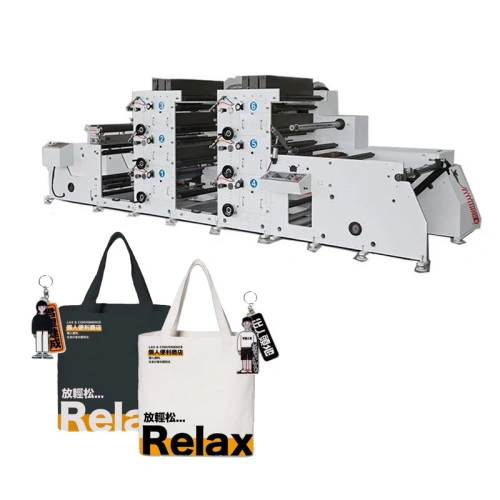
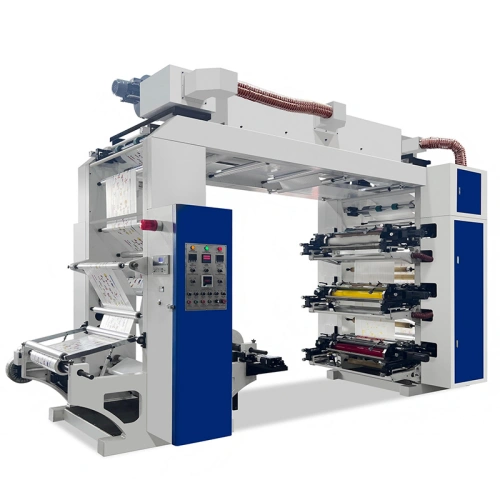
Buying the wrong printing press can easily waste tens of thousands of dollars. Today, the industrial printing market is dominated by the flexo printing machine, which accounts for nearly 60% of the global packaging printing market. For plant managers and procurement agents, understanding equipment types and real output is key to lowering purchasing risks.
In this guide, we will break down the selection logic, key specifications, and real-world differences between flexo and digital presses from an operational standpoint.
Flexo Printing Machine Parameters:
| Model | YG-320 | YG-420 | YG-550 | YG-650 |
| Max. web width | 320 mm | 420 mm | 550 mm | 650 mm |
| Max. printing width | 310 mm | 410 mm | 520 mm | 650 mm |
| Printing speed | 10-60 m/min | 10-60 m/min | 10-60 m/min | 10-60 m/min |
| Printing color | 1/2/3/4/5/6/7/8 color | 1/2/3/4/5/6/7/8 color | 1/2/3/4/5/6/7/8 color | 1/2/3/4/5/6/7/8 color |
| Max. unwinding diameter | 600 mm | 600 mm | 600 mm | 600 mm |
| Max. rewinding diameter | 600 mm | 600 mm | 600 mm | 600 mm |
| Printing length | 177.8-355.6 mm | 177.8-355.6 mm | 177.8-355.6 mm | 177.8-355.6 mm |
| Voltage | 380V±10% | 380V±10% | 380V±10% | 380V±10% |
| Precision | ±0.15mm | ±0.15mm | ±0.15mm | ±0.15mm |
| Voltage | 3P 380V,50HZ | 3P 380V,50HZ | 3P 380V,50HZ | 3P 380V,50HZ |
| Model | YG-850 |
| Maximum paper width | 860mm |
| Maximum printing width | 850mm |
| Plate repeat length | 181~450mm |
| Maximum unwinding diameter | 1000mm |
| Maximum recovery diameter | 1000mm |
| Registration accuracy | ±0.12mm |
| Gear specification | 1/8cp |
| Maximum machine speed | 100m/min |
| Plate thickness | 1.7mm |
| Plate thickness | 0.38mm |
| Suitable printing material | 30-300gsm paper printing |
| Host Color | white |
| Operation language | Chinese and English logo |
| Operation console | located in front of the printing unit |
| Air pressure requirements | 100PSI (0.6Mpa), clean, dry, oil-free compressed air |
| Power supply demand | 380V±10% 3PH phase 50HZ |
| Tension control range | 10-100KG |
| Tension control accuracy | ±0.5kg |
| Drying method | ordinary IR, optional (UV) |
| Heating oven maximum temperature | 80℃ |
Why Is the Flexo Printing Machine the Standard for Packaging?
Because its production cost is low, and its running speed is extremely fast. For mass production, an efficient flexo printing machine reaches speeds of 100 to 400 meters per minute. Although plate making requires upfront investment, the cost per unit drops significantly when orders exceed 5,000 units.
It also handles many substrates well. From corrugated boxes and kraft bags to stretchy plastic films and foils, it delivers steady ink coverage.
Pro Tip: If your plant mainly runs long runs, pick a water-based ink flexo press. It keeps you eco-compliant and saves on emissions treatment fees.
What Are the Differences Between Common Flexo Printing Machine Types?
The main differences lie in unit arrangement and registration accuracy. Your choice depends on the materials you need to print.
1. Stack Flexo Printing Machine
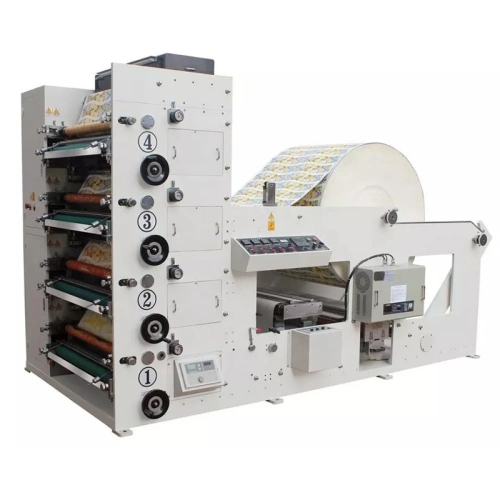
It is compact and saves floor space. The printing units stack vertically, keeping purchase costs low. It fits startup plants with tight budgets and limited space. However, multiple web turns lower registration precision (around ±0.3mm), and speeds stay around 50–150 m/min.
2. Unit-Type Flexo Printing Press
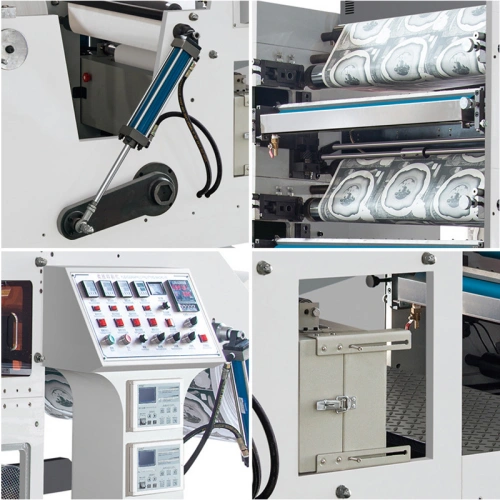
Its printing units sit horizontally inline, offering high modularity. You can freely add lamination, die-cutting, or cold foiling units. It supports double-sided printing and serves as the workhorse for narrow-web labels (<600mm) and adhesive tapes.
3. CI Flexo Printing Machine
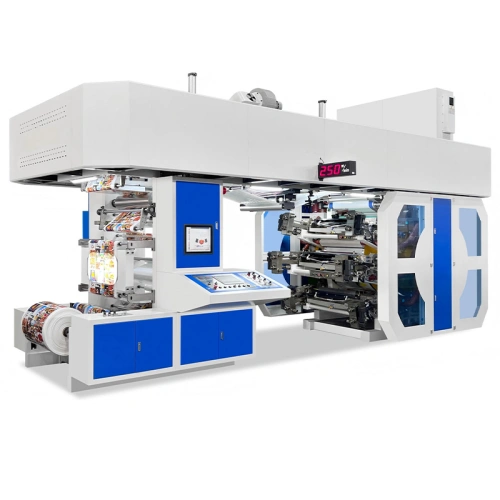
All printing units center around a single central impression cylinder. Because the substrate hugs the central cylinder, it does not stretch or deform during printing. A ci flexo printing machine achieves registration accuracy up to ±0.05mm and speeds of 200–600 m/min. It is the top choice for plastic films and flexible packaging.
What Are the Real-World Applications for a Flexo Printing Machine?
Different industries demand different specs. Common production scenarios include:
- Food and Beverage Packaging: Used for paper cups, drink labels, and pouch bags. Uses water-based inks to meet food safety standards.
- Logistics and Box Pre-printing: Used for high-speed printing on corrugated boxes and large kraft sacks.
- Self-Adhesive Labels: Inline unit presses pair with rotary die-cutters to print and trim labels in one pass.
- Non-Woven Products: Used for eco-friendly shopping bags, non-woven items, and hygiene product backsheets.
How to Choose Between a Flexo Printing Machine and a Digital Printing Machine?
The decision comes down to order volume and customization needs.
A digital printing machine requires no plates and supports variable data. It fits short-run, highly customized jobs, such as samples under 500 units or personalized gifts. However, its cost per page remains high, and maintenance costs run steep at higher speeds.
In contrast, a flexo printing machine excels at steady orders above 3,000 units. Plate making takes time upfront, but running speeds are 3 to 5 times faster than digital setups. It offers clear cost advantages for high-volume jobs.
Pro Tip: Many established plants run both. They use digital presses for urgent sample proofs and flexo presses for main production runs.
Real Client Case: How a Southeast Asian Plant Boosted Efficiency by 35%
Last year, a packaging factory owner from Vietnam contacted our team. His factory ran old stack presses for PE food pouches. Material stretch caused alignment errors, keeping scrap rates high at 12%. Setup times between jobs also wasted hours.
The Solution: We evaluated his setup and recommended a 6-color ci flexo printing machine with automated tension control and fast-drying systems.
The Outcome: After setup, registration accuracy reached ±0.05mm, dropping scrap rates from 12% to 1.5%. Running speed increased from 80 m/min to 220 m/min. Overall plant efficiency rose by 35%, helping the client recoup equipment costs within 8 months.
Pro Tip: When upgrading to a CI model, check your plant power supply beforehand. High-speed dryers place extra load on electrical grids.
Frequently Asked Questions (Q&A)
With regular maintenance, a solid mechanical frame lasts 10 to 15 years. Wear parts like anilox rollers and rubber rollers need cleaning or replacing every 2 to 3 years based on use.
Unstable tension control or worn mechanical gears are the most common causes. For film printing, heat-induced web stretch is another culprit. Check tension sensors and drying temperatures.
If local labor costs are low and order runs stay uniform, semi-automatic models offer good value. If you switch jobs often and lack skilled operators, automatic models save significant setup time.
How to Execute Your Purchase Plan
Buying a flexo printing machine isn’t about getting the most expensive unit. It is about matching your order profile. First, identify your main substrate (paper or film). Second, calculate your average order volume.
If you plan to upgrade or build a new printing line, reach out to the engineering team at YG Machinery. We provide tailored equipment selection, sample testing, and full technical support.