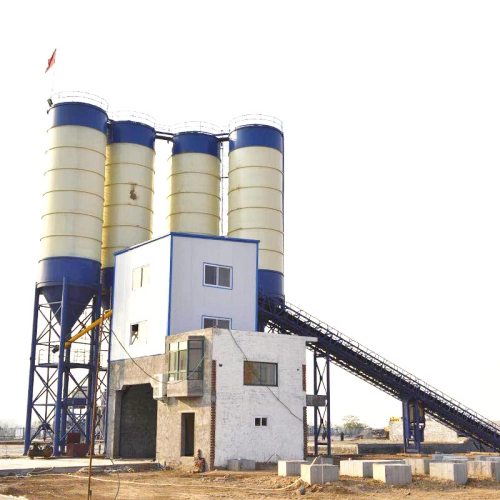
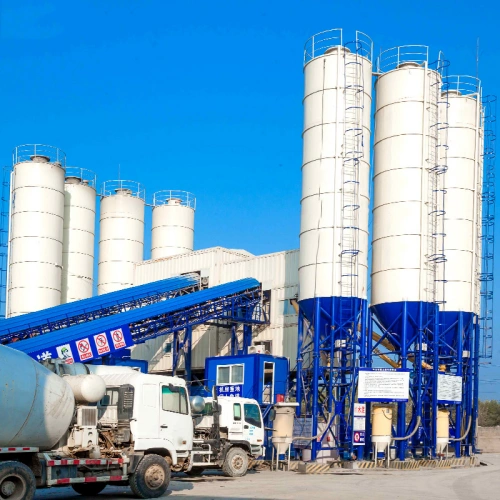
Choosing the right concrete batching plant directly determines project timelines and overall net profit for large-scale construction and ready-mix projects. Equipment quality varies greatly in today’s market. Selecting the wrong plant type often leads to soaring ocean freight costs, delayed site installation, or underperforming production capacity. Based on years of global delivery experience from the YG Machinery team, this practical guide helps contractors make informed, cost-effective decisions.
Concrete Batching Plant Parameters:
| Model | YG20 | YG30 | YG60 | YG100 |
| Production capacity (m3/h) | 20 | 30 | 60 | 100 |
| Concrete mixer | YG500 | YG750 | YG1500 | YG2000 |
| Aggregate feeding mode | Belt conveyor | Belt conveyor | Belt conveyor | Belt conveyor |
| Aggregate size(mm) | 80/60 | 80/60 | 80/60 | 80/60 |
| Discharging height(m) | 1.5 | 1.5 | 1.5 | 1.5 |
| Aggregate weighing accuracy (%) | ±2 | ±2 | ±2 | ±2 |
| Cement weighing accuracy (%) | ±1 | ±1 | ±1 | ±1 |
| Water weighing accuracy (%) | ±1 | ±1 | ±1 | ±1 |
| Additive weighing accuracy (%) | ±1 | ±1 | ±1 | ±1 |
| Control system | Panel | Computer | Computer | Computer |
| Total power (kw) | 42 | 46 | 67 | 77.5 |
| Total weight) | 12 | 13 | 14.5 | 26 |
What Is a Concrete Batching Plant and How Does It Work?
A concrete batching plant is an integrated system that combines sand, gravel, cement, water, and additives in precise proportions to produce structural-grade concrete.
The plant consists of aggregate batchers, belt or skip hoists, twin-shaft mixers, cement silos, and automated PLC control systems. The industry categorizes equipment into dry mix and wet mix plants based on the mixing method. For precast elements or bridge projects requiring high strength and strict slump control, a central mix concrete plant equipped with a heavy-duty twin-shaft mixer is the industry standard for maximum concrete homogeneity.
Stationary Concrete Batching Plant vs. Mobile Concrete Batching Plant: What Are the Differences?
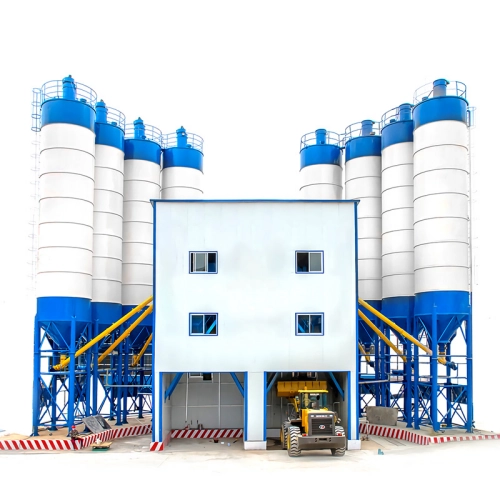
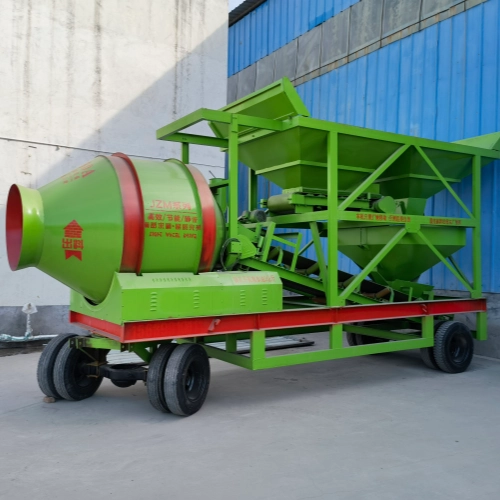
Deciding between a stationary concrete batching plant and a mobile concrete batching plant depends on your project timeline and site relocation frequency.
A stationary concrete batching plant (such as the HZS90 or HZS120) is built for long-term projects and high-volume output. These plants utilize belt conveyor loading systems, offering production rates from 60 m³/h to over 240 m³/h. While initial concrete foundation costs are higher, their heavy-duty frame provides exceptional stability and an operational lifespan of 10 to 15 years. They remain the top choice for commercial ready-mix suppliers and major dam construction.
Conversely, a mobile concrete batching plant (such as the YHZS35 or YHZS60) integrates the main mixer, aggregate batcher, and control cabin onto a towable chassis. Workers can assemble and commission the plant within 2 to 3 days with minimal foundation work. For road repair work, rural infrastructure, or short-term projects lasting under 12 months, mobile units cut site preparation and setup expenses by up to 40%.
💡 Pro Tip: If your project moves more than twice a year, pick a mobile concrete batching plant without hesitation. But if you need over 1,000 cubic meters per day at a fixed spot, choose a stationary plant.
What Are the Key Applications for a Concrete Batching Plant Across Industries?
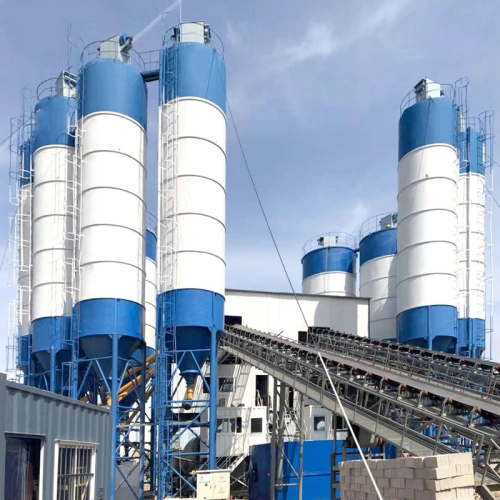
Different construction sectors demand tailored configurations for a concrete batching plant:
- Commercial Ready-Mix Supply: Requires multiple bolted cement silos and automated batching software for fast formula switching and continuous 24/7 operation.
- Highways, Bridges, and Airport Runways: Requires precise slump control. A central mix concrete plant with a twin-shaft mixer and a 4-bin aggregate batcher handles varied rock sizes effortlessly.
- Dam and Water Conservancy Projects: Often requires chilled water or ice dosing systems to control concrete temperature during curing.
- Remote and Small Infrastructure Jobs: Uses a compact mobile concrete batching plant with built-in water tanks and kingpins for easy towing over rough terrain.
💡 Pro Tip: Tell your manufacturer the maximum aggregate size you plan to use before buying. Oversized rocks damage standard mixer liners, so request reinforced high-chromium wear plates if needed.
Real Overseas Case Study: How a Southeast Asian Contractor Saved Money on Shipping and Setup
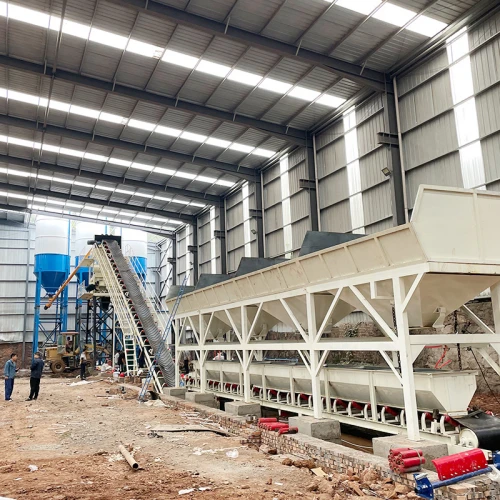
A contractor named Carlos faced a tough challenge during a highway project in Southeast Asia: weak site soil and extremely high container freight rates.
The YG Machinery engineering team customized a modular 60 m³/h mobile concrete batching plant for his job site. By using a foldable chassis frame and a bolted cement silo design, we compressed the shipment from six standard 40HQ containers down to four. This saved Carlos 35% on ocean freight costs right away.
When the equipment arrived on site, YG engineers provided 3D setup drawings and guided the local team via video call. The crew completed assembly and electrical testing in just 48 hours. The plant ran smoothly for 14 straight months in high heat and humidity, producing 200,000 cubic meters of concrete and helping Carlos complete his project 20 days ahead of schedule.
💡 Pro Tip: Container loading layout directly impacts your total import cost. Ask your factory for a detailed 40HQ container packing plan to avoid paying extra for breakbulk cargo space.
Frequently Asked Questions (FAQ)
A plant’s rated capacity (e.g., 60 m³/h) represents theoretical maximum output. Real-world output usually averages 75% to 85% of that figure. Use this simple formula: Required Capacity = Daily Volume Needed ÷ Daily Working Hours ÷ 0.8. For instance, if you need 500 m³ of concrete per day across an 8-hour shift, order a 90 m³/h stationary concrete batching plant.
Beyond the FOB price of the machine, budget for ocean freight, customs tariffs, local foundation building, diesel generator rental (if grid power is unstable), and a 1-to-2-year spare parts kit.
The main wear parts are mixer liner plates, mixing arms, mixing blades, pneumatic butterfly valves, and liner bolts. High-chromium alloy liners usually last between 40,000 and 60,000 batches, depending on aggregate hardness.
💡 Pro Tip: Always order a 1-to-2-year wear parts package along with your main equipment shipment. Sending spare mixing blades later by express air freight will cost more than the parts themselves.
Ready to Upgrade Your Construction Equipment?
Investing in the right stationary concrete batching plant is the first step toward project profitability. YG Machinery brings over 20 years of factory manufacturing and global export experience, offering complete batch plant solutions from 25 m³/h to 240 m³/h.
Contact YG Machinery engineers today for a custom quote and 3D plant layout! Whether you need a heavy-duty stationary concrete batching plant or a portable mobile concrete batching plant, our technical team will respond within 12 hours with factory-direct solutions.