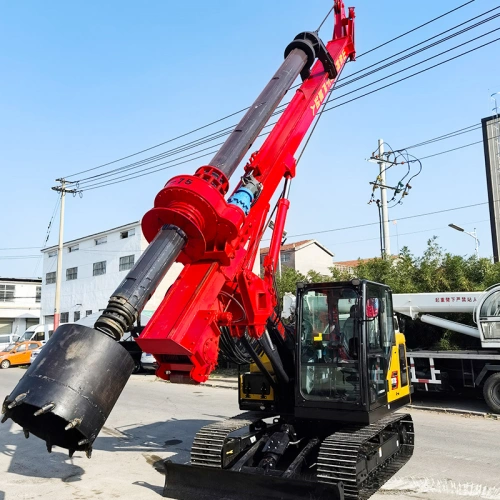
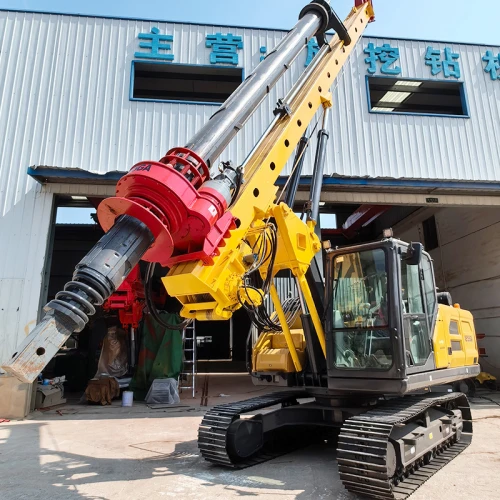
Think of a rotary drilling rig as a massive, heavy-duty earth drill. Before building a house, bridge, or highway, workers must create deep, round holes in the ground. They fill these holes with steel and concrete to make strong underground pillars called bored piles.
This powerful rotary drilling machine makes that job quick and neat. Instead of slowly digging by hand, the rig rotates a heavy steel bit to scoop out dirt and rock.
Common Uses for Beginners:
- Building Foundations: Drilling deep holes to support new houses or commercial buildings.
- Bridge Construction: Making strong bases for river and highway bridges.
- Retaining Walls: Boring holes along slopes to prevent landslides.
💡 Beginner Mistake to Avoid: Never use the same drill bit for every soil layer. Use a standard drilling bucket for soft soil, but switch to a core barrel or auger for hard rock. Using the wrong bit slows down your work and wears out your rotary drilling equipment fast.
Rotary Drilling Rig Parameter
| Model | YG13 | YG15 | YG16 | YG20 |
| Max.Drilling Diameter | 1000mm | 1600mm | 1500mm | 1600mm |
| Max.Drilling Depth | 13m | 15m | 16m | 20m |
| Max. Rotary torque | 50KN.m | 45kN .m | 46KN.m | 36KN.m |
| Rotary angle | 360° | 180° | 180° | 360° |
| Rotary speed | 10-45r/min | 17-45r/min | 20-46r/min | 22-43r/min |
| Dimension(m) | 3.1×1.92×3.5m | 6.8×2.27×3.2m | 10 x 2.3x 3.2 m | 9.5×2.6×3.5m |
| Weight | 9ton | 13 ton | 11 ton | 17.8 ton |
Real Story: How a Mexican Contractor Got Started
Let us look at a real example. A small building team in Mexico won a contract for a three-story commercial foundation. In the past, they rented a rotary piling rig. But high rental fees and bad equipment maintenance were eating up their profits.
They decided to buy their very first rotary drilling rig from YG Machinery. Since they were new to buying heavy gear overseas, they felt nervous about technical specs.
We helped them analyze their local soil layer and recommended a compact model that was easy to haul on standard trailers. We provided clear English manuals and guided their operators via video calls.
The result? The team finished their project two weeks early. They saved over 30% on equipment costs compared to renting and now take on bigger projects with ease.
💡 Beginner Mistake to Avoid: Don’t just buy the biggest machine you can find. Look closely at your required pile diameter and depth. Buying a machine that is too big increases transport costs and fuel consumption needlessly.
Beginner Q&A: Buying, Operating, and Basic Maintenance
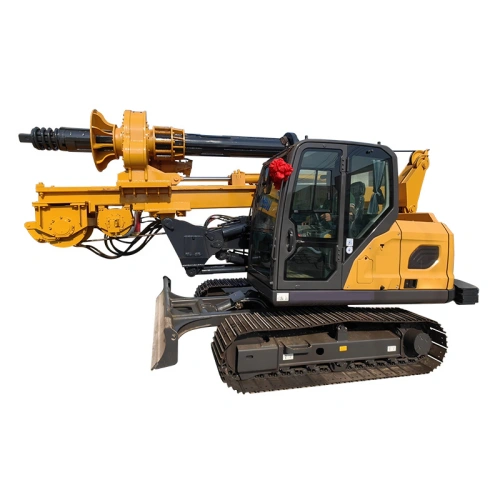
Start with three simple numbers:
Pile diameter: How wide are your holes?
Drilling depth: How deep do you need to go?
Soil type: Is it soft clay, sand, or hard rock?
If you work mostly on residential sites, a compact rotary piling rig with a friction Kelly bar is usually enough. For deep holes in soft ground, an interlocking Kelly bar gives better force.
Daily care keeps your rotary drilling machine alive for years. Check these three points every morning:
Check hydraulic fluid and engine oil levels.
Inspect the Kelly bar and wire ropes for cracks or excessive wear.
Add fresh grease to all main rotating bearings and joints.
When drilling in loose sand or wet soil, the borehole wall can cave in. To stop this, use bentonite slurry (a special mud mix) or install temporary steel casings while drilling. This holds the dirt back and keeps your hole clean.
Buying your first rotary drilling rig does not have to be scary or complicated. Focus on your actual job requirements, do simple daily maintenance, and work with a reliable manufacturer who offers direct guidance.
Got questions about picking the right rig for your upcoming project? Drop us a message at YG Machinery, and we will help you figure it out step by step!