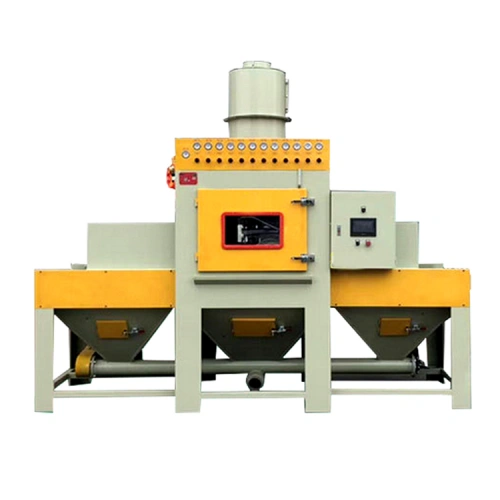
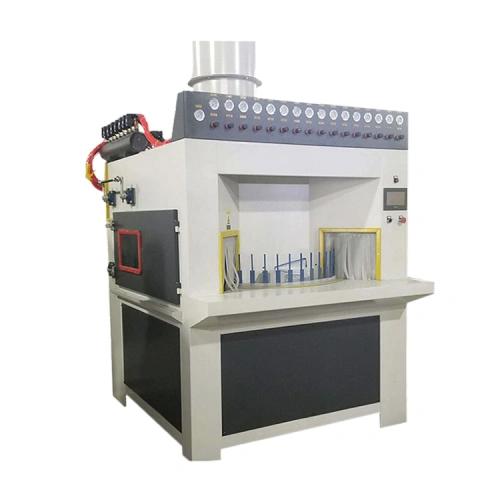
A sand blasting machine uses a high-speed abrasive stream to clean and smooth industrial surfaces. Compressed air propels abrasive media against metal or non-metal parts. This process removes rust, scale, and old paint while increasing surface roughness for maximum coating adhesion.
Sand Blasting Machine Parameters
| Machine models | YG400 | YG500 | YG600 | YG700 | YG800 | YG900 | YG1000 |
| Diameters(mm) | 400 | 500 | 600 | 700 | 800 | 900 | 1000 |
| Height(mm) | 1150 | 1150 | 1150 | 1250 | 1700 | 2000 | 2000 |
| Volume(cubic meter) | 0.26 | 0.26 | 0.26 | 0.3 | 0.6 | 0.8 | 1 |
| Pressure(Mpa) | 0.4-8 | ||||||
| Air consumption(cubic meters per minute) | 3 | ||||||
What Are the Main Types of Sand Blasting Machines?
Industrial blast units fall into two main categories: dry units and wet units. Each type serves different surface requirements and environmental regulations.
- Dry Sand Blasting Machine: This system runs purely on dry media. It offers a simple design and lower initial cost. Because it uses no water, it prevents flash rust on steel parts during heavy cleaning.
- Wet Sand Blasting Machine: This unit mixes water and abrasive media at a 1:1 ratio. A water sand blasting machine suppresses virtually all airborne dust. It meets strict environmental compliance rules for city or indoor jobs.
Hands-on Tip: Choose a dry unit for raw steel parts, but switch to a wet sand blasting machine when working under strict local dust limits.
How Do You Choose the Right Capacity and Mobility?
Manufacturers categorize blast tanks by outer diameter, ranging from 400 mm to 1200 mm. Tank size directly determines media volume and continuous running time.
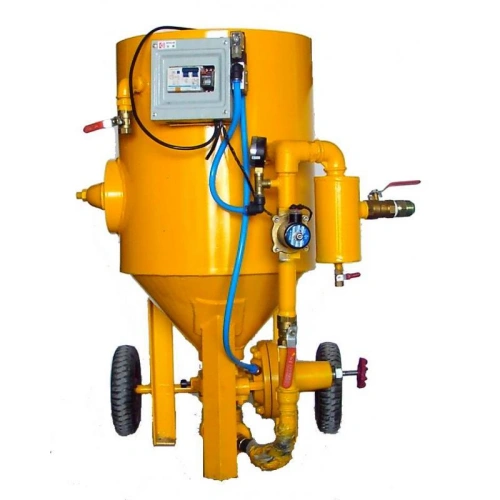
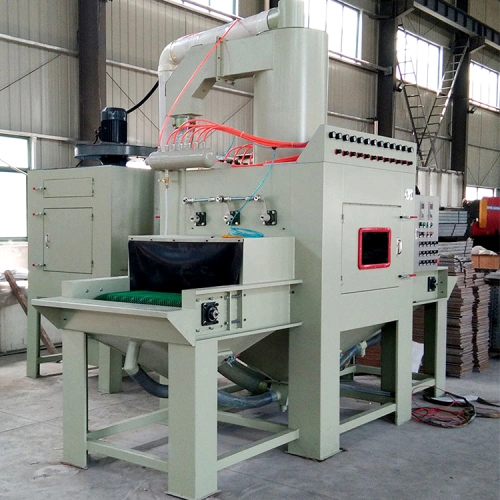
- Portable Sand Blasting Machine: Models with diameters from 400 mm to 700 mm feature heavy-duty wheels. They hold 100 kg to 400 kg of media. Weighing under 300 kg, these mobile units move easily across busy jobsites.
- Stationary Sand Blasting Machine: Larger tanks from 800 mm to 1200 mm sit on four structural steel legs instead of wheels. These heavy units hold up to 800 kg of abrasive. While larger capacity extends blast time between refills, working speed still depends on target complexity, averaging 20–30 m²/h.
Hands-on Tip: A bigger tank does not blast faster per hour; it simply means fewer stops for media refills!
What Air Compressor and Accessories Do You Need?
A blast tank has no built-in power source and requires a compatible air compressor to function.
A standard 600-type unit needs an air compressor delivering 4–6 m³/min at 0.8 MPa pressure. Plant setups work best with stationary compressors and air receiver tanks. Outdoor projects run smoother with mobile diesel compressors. Higher air volume produces higher nozzle pressure and speeds up surface prep. Choosing an automatic sand blasting machine with a pneumatic control valve allows a single operator to manage the blast gun remote switch, cutting labor costs in half.
Hands-on Tip: Pair tanks under 700 mm diameter with a 25 mm inner-diameter hose and an 8 mm or 10 mm nozzle for ideal pressure.
Real World Case Study: Steel Bridge Maintenance Project
- Background: A South American contractor needed to remove rust and repaint a structural river bridge.
- Challenge: Manual scraping was too slow, and moving heavy machinery on high scaffolding stalled project schedules.
- Solution: The contractor selected a YG Machinery 600-type mobile dry unit connected to a 6 m³/min diesel compressor with a Q235B steel tank (6 mm wall thickness).
- Results: Cleaning speed hit 25 m²/h, cutting site labor costs by 60% and boosting paint adhesion pass rates to 98%.
Frequently Asked Questions (FAQ)
What is the main driver of the sand blasting machine price?
Which abrasive media should I use and can it be recycled?
Final Thoughts: How to Choose the Right Blasting Setup?
Selecting an industrial blast unit involves more than picking a steel tank; it requires a complete surface prep solution. Matching dry or wet methods to your material and pairing mobile tanks with correct compressor air volumes, directly impacts daily output and operating costs. As a dedicated manufacturer, YG Machinery delivers high-durability blasting equipment paired with complete accessory support. Contact our technical team today to get your custom quote and tailored equipment configuration!