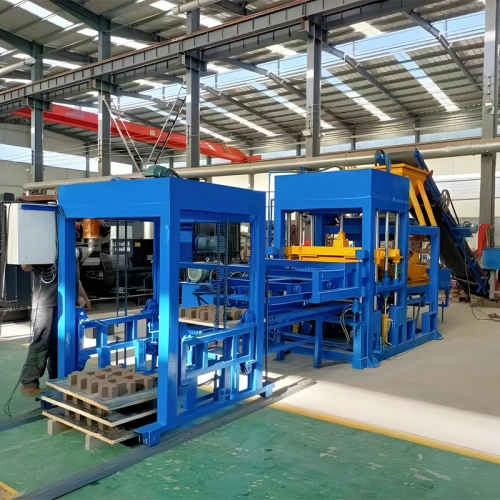
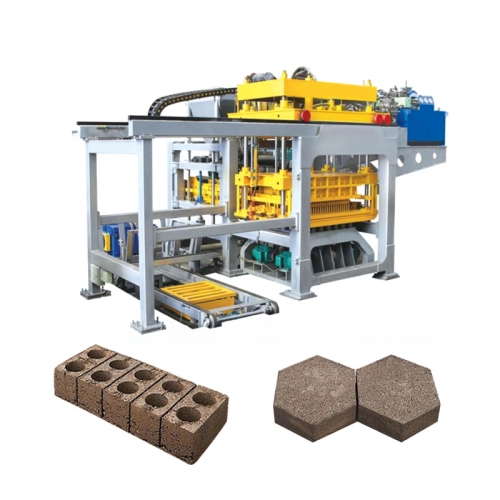
Investing in an efficient brick making machine directly cuts your unit production costs on construction job sites. Industry data shows that using matched hydraulic forming equipment boosts raw material utilization by over 35%, significantly shortening your payback period. Based on real field experience, we created this guide for overseas buyers and contractors.
Brick Making Machine Parameters:
| Block Name | Size (L*W*H)mm | Molding Cycle | QTY/Mould | QTY/hour | Qty/8hr |
| Hollow block | 400*200*200 | 15-20s | 6pcs | 1080-1440pcs | 8640-11520pcs |
| Hollow block | 400*150*200 | 15-20s | 7pcs | 1260-1680pcs | 10080-13440pcs |
| Hollow block | 400*100*200 | 15-20s | 11pcs | 1980-3640pcs | 15840-21120pcs |
| Porous block | 240*115*90 | 15-20s | 15pcs | 2700-3600pcs | 21600-28800pcs |
| Standard brick | 240*115*53 | 15-17s | 30pcs | 6300-7200pcs | 50400-57600pcs |
| Paver | 225*112.5*60 | 20-25s | 15pcs | 2160-2700pcs | 17280-21600pcs |
What Are the Main Field Applications for a Brick Making Machine?
An automated brick making machine plays a key role in modern structural projects and municipal infrastructure. By swapping different molds, one unit can produce hollow blocks, solid bricks, curb stones, and interlocking pavers.
In municipal projects, high-density permeable pavers are used for city plazas and walkways to improve drainage. For commercial and housing builds, multi-cavity hollow blocks offer sound reduction and thermal insulation. For slope protection projects, specialized interlocking units prevent soil erosion effectively.
Pro Tip: Always confirm your local market’s top-selling block dimensions (like 400×200×200mm hollow blocks) first. Send us your block drawings, and we will customize the mold cavity numbers for you.
Semi-Automatic Vs. Fully Automatic: Which Brick Production Machine Fits Your Factory Best?
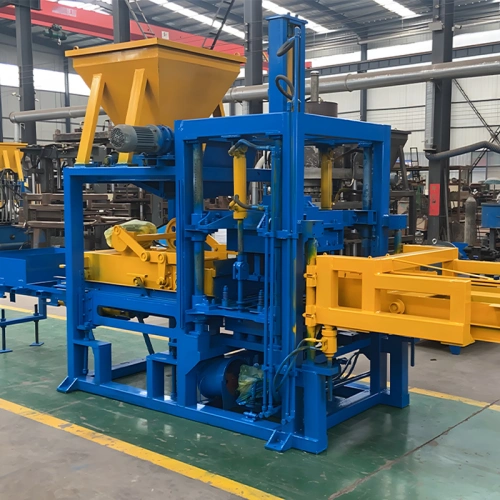
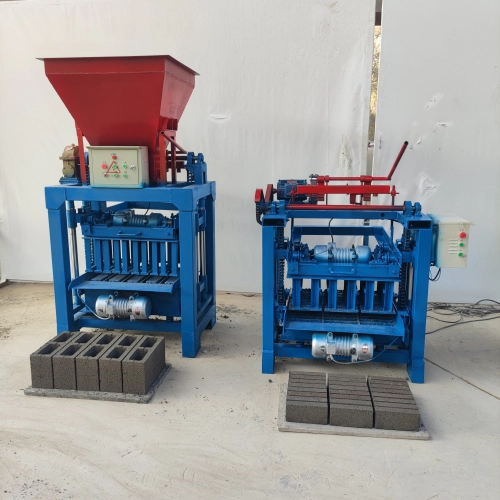
Choosing between a semi-automatic or fully automatic brick production machine comes down to your capital budget and target daily output.
Semi-automatic setups (like the QT3-15) yield around 8,000 to 9,000 pieces per 8-hour shift, making them great for small yards or start-ups focused on tight cost control. Fully automatic lines (like the QT4-15 or QT5-15) integrate batching machines, electronic weighing, and automatic stackers. They reach 11,000 to 13,000 pieces per shift while slashing labor demands.
Pro Tip: If local labor costs run high, go straight for an automatic line with an auto-stacker. Two workers can run the whole shop, and labor savings will cover the machine price gap in a year.
How to Check the Build Quality of a Brick Made Machine?
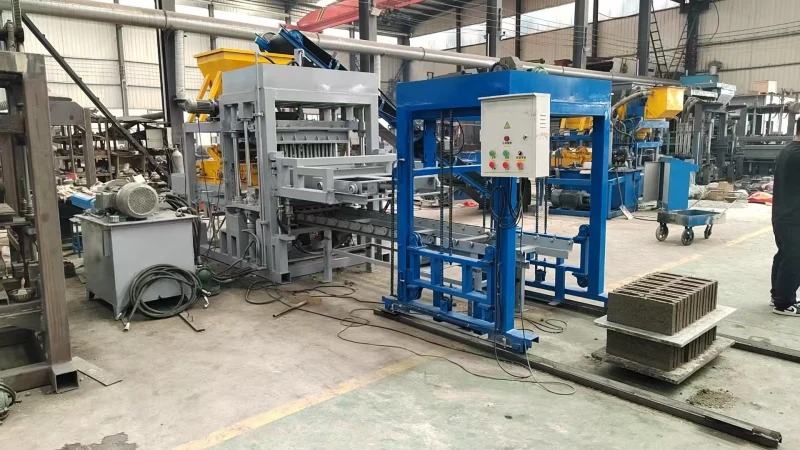
Checking the inner build quality of a brick made machine requires a close look at its hydraulic power pack and vibration assembly.
Top-tier units use combined hydraulic and vibration molding to guarantee dense internal structures and high compressive strength. Heavy-duty steel frames with thick plate welding decide whether your machine lasts through years of heavy vibration. Meanwhile, a PLC control cabinet offers clear fault checks and push-button operation.
Pro Tip: Don’t just look at fresh paint. Check guide pillar thickness and hydraulic valve brands on the main frame. Thick guide columns keep your machine steady without shaking loose.
Real Field Case: How a Brick Machine Solved a Site Supply Shortage?
On a road expansion project in Southeast Asia, contractor Carlos faced severe block shortages and poor local quality.
We customized a complete QT4-15 automatic brick machine line for him, including a batching machine and 700 pallets. The whole rig shipped in a single 40ft container and was up and running within three days after arrival.
This setup dropped his hollow block unit cost by nearly 28% with a stable output of 12,000 blocks daily. Carlos covered his project deadline and sold excess blocks to neighboring sites, paying off his equipment investment in under six months.
Pro Tip: Ask your supplier to fill remaining 40ft container space with extra pallets and wearing seals. It saves you huge sea freight costs later.
Frequently Asked Questions About Brick Making Machine Purchasing
What is the average daily capacity of a brick making machine?
Do I need a whole new machine to produce different block shapes?
What container size is needed for sea shipping?
Planning a new block production line or upgrading your current machinery? Contact the YG Machinery team today to get custom mold designs and an instant quote!