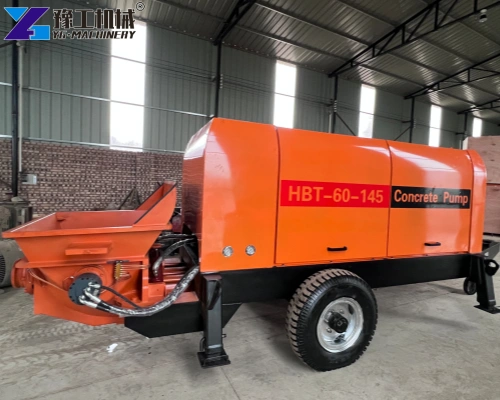
In November 2025, Monterrey, Mexico, was deep in its dry season. Alejandro, a local project engineer, stood in a narrow alley just 2.4 meters wide. He stared at his team of eight workers, all drenched in sweat, pushing heavy wheelbarrows. His eyebrows furrowed.
This was a typical urban residential renovation project in Latin America. A massive ready-mix truck could not even dream of entering this old neighborhood. If they relied on manual labor to wheelbarrow the concrete mix and hoist it up in buckets to the 3rd floor, it would take three whole days. Besides the brutal labor costs, trying to pour concrete under a 32°C Mexican sun is a race against time. The mix dries out way too fast, leaving you with weak, cracked structures.
Alejandro needed a real change. He contacted YG Machinery, looking for a reliable mini concrete pump for sale to save his project timeline.
💡 On-Site Construction Tip: When working in hot regions like Mexico or Texas, always run a slump test the moment the mix arrives. Keep your pumping slump between 160mm and 200mm. If it drops too low under the sun, you will face a clogged pipe within minutes.
Parameters of Mini Concrete Pump for Sale:
| Model | YG-20 | YG-30 | YG-40 | YG-50 |
| Motor power | 22KW | 37KW | 45KW | 55kw |
| Maximum outlet pressure | 26mpa | 28mpa | 28mpa | |
| Maximum theoretical throughput | 16-18m³/h | 20-22m³/h | 35m³/h | |
| The maximum particle size of aggregate | ≤20mm | ≤30mm | ≤40mm | |
| Vertical conveying distance | 40m | 80m | 120m | 150m |
| Horizontal conveying distance | 80m | 140m | 2600m | 300m |
| Diameter of conveying pipe | 80mm | φ80 (100) mm | φ100 (80) mm | Φ125/100mm |
| Whole machine weight | 1600kg | 2200kg | 2400kg | 2500kg |
| Dimensions | 3400x1200x1600mm | 3600x1500x1600mm | 4000x1500x1550mm | 4200*1700*1750mm |
Finding the Best Mini Concrete Pump Machine for Mexican Job Sites
When we jumped on a video call with Alejandro, we did not just throw a generic catalog at him like typical trading companies do. Instead, we asked him to point his phone camera at his raw sand and gravel pile on site.
We noticed that his local aggregate size consisted mostly of 5-16 mm fine stones. Knowing this, we skipped the heavy, overpriced boom trucks and recommended a heavy-duty, diesel-driven mini concrete pump machine.
Why Opt for a Diesel Portable Mini Concrete Pump?
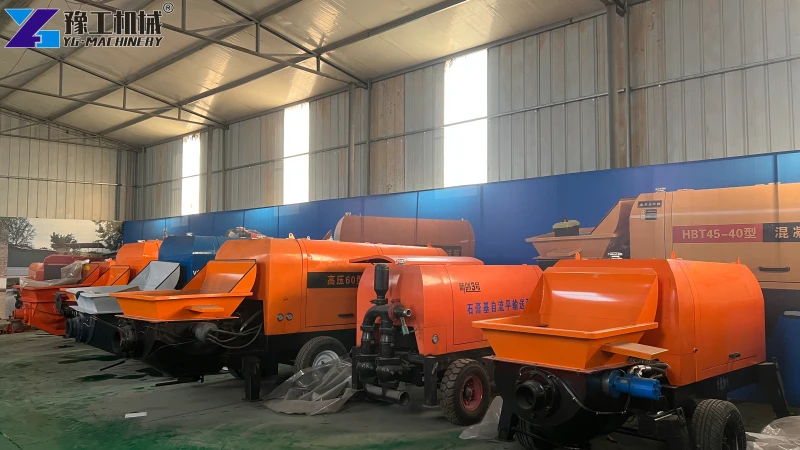
On many suburban jobsites across Mexico, temporary power lines suffer from frequent voltage drops. If you run a purely electric pump there, a sudden drop can easily burn out the motor or stall your pour mid-way.
Our diesel portable mini concrete pump uses a high-pressure hydraulic pump core. It generates up to 16 MPa of hydraulic pressure. This means even if the concrete mix gets a bit thick, the powerful hydraulic pistons push it up to the third floor without breaking a sweat. Plus, with its durable tires, a standard pickup truck can tow it through old city sectors effortlessly.
From 3 Days to 4 Hours: The Raw Speed of a Small Cement Pump
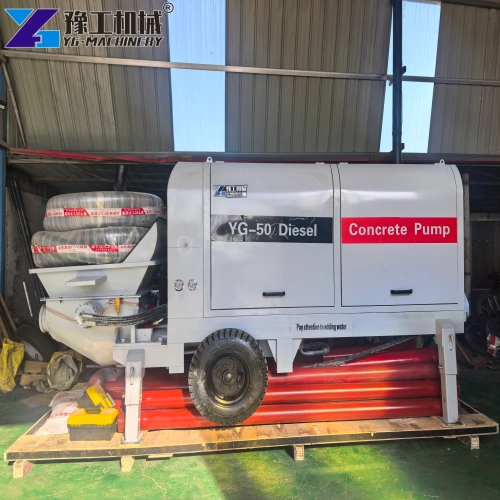
After the machine arrived at the Port of Monterrey and cleared customs, our engineers hopped on a WeChat video call to guide Alejandro’s crew through their first operational start.
Alejandro ran a strict test that morning. The crew lubricated the pipe with clean water first, followed by a quick mortar priming batch. Then, they kept their small mixer dumping concrete into the hopper continuously. The small cement pump let out a deep, steady rumble as the heavy hydraulic pistons began their rhythmic strokes.
The grey concrete shot through the delivery lines, pouring directly onto the 3rd-floor roof formwork. A brutal job that usually took eight men three long days was now managed by one pump operator and two guys directing the pipe nozzle on the roof.
In exactly four hours, the entire floor slab was poured cleanly.
💡 On-Site Construction Tip: Cleaning the lines immediately after your daily pour is non-negotiable. Insert a foam clean-out ball and use the water pump to flush it through. Keep the entire washing cycle under 15 minutes so the concrete never gets a chance to harden inside the pipeline.
Where Else Can You Deploy This Machinery in Today’s Market?
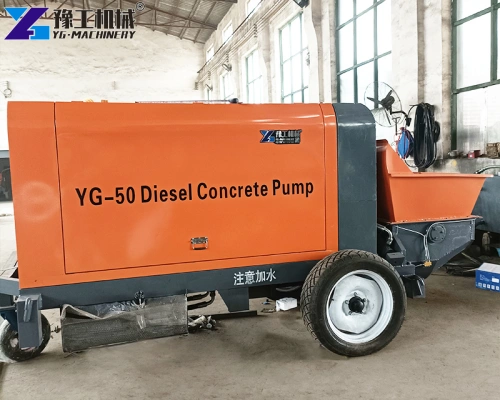
Alejandro’s housing project is just one example. Across Latin America and North America, as manual labor costs continue to climb, this compact pumping machinery has become a basic necessity for smart contractors.
Key Application Fields:
- Rural Roads & Alleys: Many mountain roads are too narrow or steep for transit mixers to park safely. A portable unit is the only logical choice.
- Retaining Walls & Slope Stabilization: Ideal for pumping fine stone concrete into hillside reinforcements throughout mountain regions.
- Irrigation Canal Linings: Transporting concrete over medium distances to pour side-walls for water conservation channels.