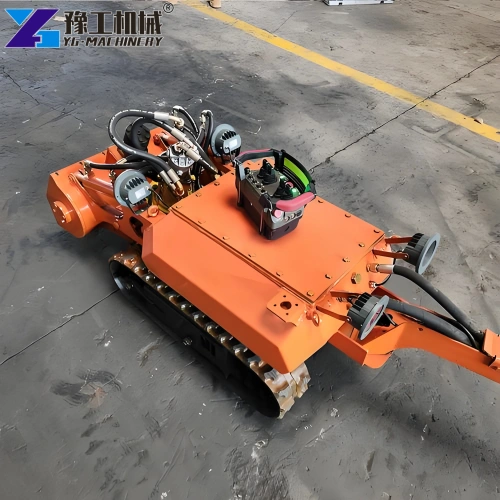
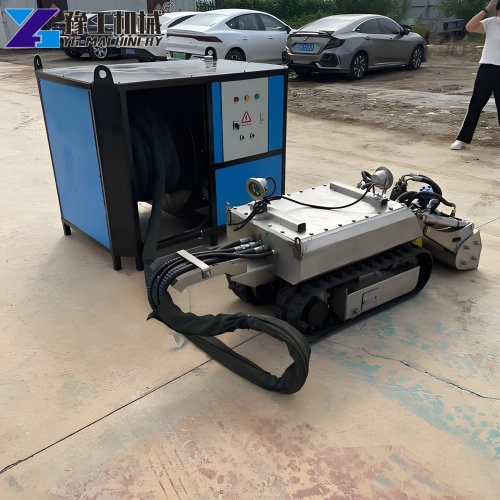
In today’s market, efficiency dictates your profit margins. I have seen many factories lose hundreds of thousands of dollars due to traditional “drain-and-clean” methods. Manual cleaning is not just slow; it is full of deadly gas risks like hydrogen sulfide. Using a sludge removal robot solves these pain points directly. It allows you to complete cleaning without draining liquids or stopping production. This change is not just technical; it is about saving your cash.
✏️Tip: Before you make a purchase, double-check the robot’s “integrated functions.” YG units are designed to walk, suction, crush, and mix. If you skip the crushing feature, those tough sludge cakes could bring your project to a standstill.
Sludge Removal Robot Parameter:
| Parameter | YG500 | YG600 | YG700 | YG800 | YG900 | YG1200 |
| Robot Dimensions (mm) | 1500*500*650 | 1500*600*650 | 1600*700*650 | 1600*850*700 | 1650*960*750 | 1900*1200*750 |
| Dredging Width (mm) | 500 | 600 | 700 | 800 | 900 | Suitable for large culverts |
| Travel Speed (m/s) | 3–15 | 3–15 | 3–15 | 3–15 | 3–15 | 0–17 m/min |
| Pump Diameter (inch) | 3 | 3 | 4 | 4 | 4 | 4or6 |
| Pump Flow (m³/h) | 100 | 100 | 160 | 160 | 200 | 250 |
| Pump Head (m) | 0–30 | 0–30 | 0–25 | 0–25 | 0–25 | 0–30 (Horizontal: 100–150m) |
| Hydraulic Station Dimensions (mm) | 2200*1200*1700 | 2200*1200*1700 | 2200*1200*1700 | 2200*1200*1700 | 2200*1200*1700 | 2120*1240*1200 |
| Main Motor Power (kW) | 18 | 18 | 22 | 22 | 22 | 45KW (50KW) or Diesel 76KW (123KW) |
| Hydraulic System Pressure (Mpa) | 0–16 | 0–16 | 0–16 | 0–16 | 0–16 | Not specified |
| Particle Size (mm) | 15 | 15 | 40 | 40 | 50 | 0–40 (customizable) |
| Winch Speed (r/min) | 0–10 | 0–10 | 0–10 | 0–10 | 0–10 | 0–10 |
| Pipe Length (m) | 30–50 Optional | 30–50 Optional | 30–50 Optional | 30–50 Optional | 30–50 Optional | 30m/pack, 20kg pressure resistant, optional |
| Control System | Wireless Remote | Wireless Remote | Wireless Remote | Wireless Remote | Wireless Remote | Wireless Remote |
| Lighting System | Underwater LED*2 | Underwater LED*2 | Underwater LED*2 | Underwater LED*2 | Underwater LED*2 | Underwater LED*2 |
Technical Capabilities: How Sludge Removal Robot Handles Complex Scenarios?
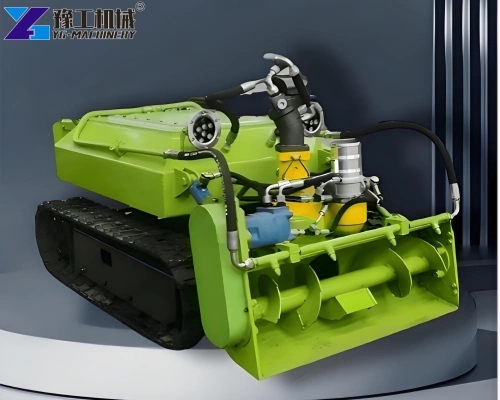
Many clients ask me, what is the hardest part of sedimentation tank dredging? The answer is “adaptability.” Our sludge removal robot is waterproof and corrosion-resistant. It works in pipelines, culverts, and rivers with ease. By using a remote control system, it replaces high-risk manual downhole work. This machine adjusts its walking speed based on conditions, ensuring dredging efficiency remains high.
Utility Requirements: Starting Your Sludge Removal Robot Project
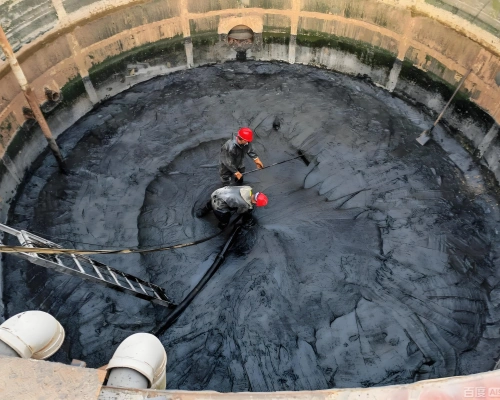
You do not need special infrastructure to start. The sludge removal robot connects to conventional temporary mains power. You only need to reserve space for equipment placement and pipeline laying. Once you have a discharge point for sludge and tailwater, you are ready to go. This flexibility allows construction to proceed based on your existing site conditions.
The Control Module: Managing the Sludge Removal Robot Remotely
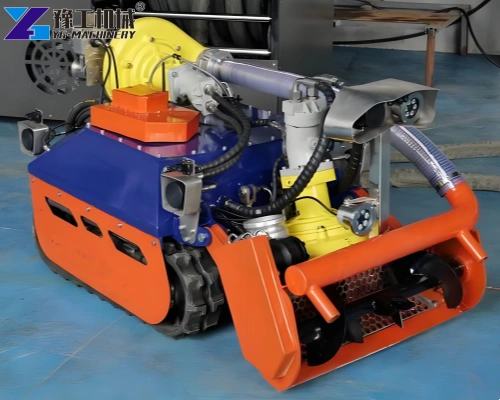
The brain of the machine is the wireless remote control terminal. Operators control all actions, including walking, dredging, and speed adjustment, from a distance. The unit integrates overload protection, leakage protection, and an emergency stop feature upon disconnection. For a sewage tank cleaning robot, this stable performance is vital for safety.
Integrated Monitoring: The Visual Core of the Sludge Removal Robot
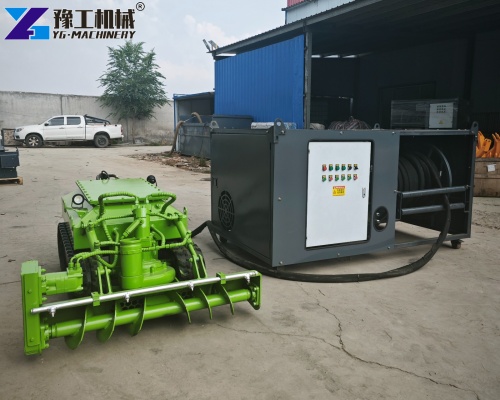
How can you see clearly at a depth of 50 meters? Our system is equipped with high-definition underwater cameras and powerful lighting. This visual monitoring hub sends back real-time images and equipment data. Plus, our sensors alert you to any potential issues before they become problems. This smart approach to industrial dredging ensures that operations are not just effective but also safe.
Success Story: A Massive Efficiency Leap at a Brazilian Steel Mill
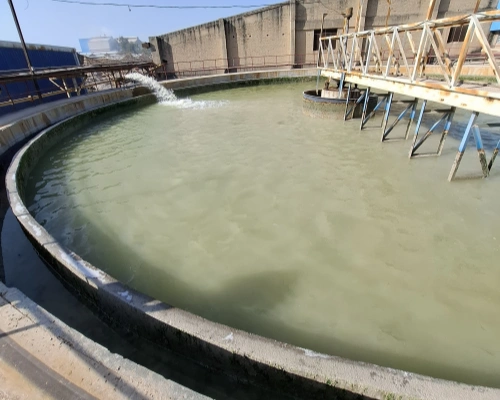
Let’s look at a real story. In Brazil, a large steel mill faced severe sludge buildup in its cooling ponds. A project manager named Marcos used to hire 20 workers for 15 days of manual cleaning every year. This involved high risks of safety fines and massive shutdown losses.
Marcos chose the YG sludge removal robot. The result was direct. Cleaning was done while the plant remained active. Using existing site power and basic utilities, they finished in just 5 days. Marcos told us that by cutting downtime and labor fees, he recovered 50% of the machine’s cost after the first project. This is the reality of modern machinery.